
How to support healthy ageing: a practical guide for vitality in 2026
Ageing often brings unwelcome changes like reduced muscle strength, lower energy levels, and decreased vitality that can significantly impact your quality of life. Many adults over 50 actively seek evidence-based supplements and lifestyle strategies to maintain their independence and vigour. This comprehensive guide equips you with clinically validated supplement recommendations, practical dosing protocols, and actionable steps to support lasting vitality and promote healthy ageing through scientifically backed approaches that work.
Table of Contents
- Understanding Healthy Ageing And Its Challenges
- The Essential Supplements To Support Vitality And Muscle Health
- Supporting Overall Healthy Ageing With Multi-Bioactive Supplements And Antioxidants
- What To Avoid And Safety Tips For Anti-Ageing Supplements
- Support Your Healthy Ageing Journey With Vivetus® Supplements
- FAQ
Key takeaways
| Point | Details |
|---|---|
| Evidence-based supplements work | HMB at 3g daily, creatine, and ashwagandha have strong clinical evidence supporting muscle strength and vitality in adults over 50. |
| Exercise amplifies supplement benefits | Combining targeted supplementation with regular resistance training yields significantly better outcomes than either approach alone. |
| Avoid unproven anti-ageing compounds | NAD+ boosters and senolytic supplements carry potential risks, lack conclusive human benefits, and require medical supervision. |
| Multi-bioactive blends support immunity | Balanced supplements containing vitamins, amino acids, and antioxidants reduce oxidative stress and enhance immune function. |
| Holistic approach delivers best results | Integrating nutrition, supplementation, exercise, and lifestyle modifications creates synergistic effects for optimal healthy ageing. |
Understanding healthy ageing and its challenges
Ageing involves complex biological processes that gradually diminish your body’s resilience and functional capacity. Scientists have identified several key hallmarks of ageing, including oxidative stress accumulation, chronic low-grade inflammation (termed inflammaging), genomic instability, and progressive telomere shortening. These interconnected processes don’t operate in isolation but rather create cascading effects throughout your body’s systems.
After 50, you’ll likely notice these biological changes manifesting as reduced muscle mass (sarcopenia), declining energy levels, slower recovery from physical exertion, and increased susceptibility to chronic diseases. Your mitochondria become less efficient at producing cellular energy, whilst accumulated oxidative damage impairs cellular repair mechanisms. Meanwhile, persistent low-grade inflammation accelerates tissue degradation and compromises immune function.
The good news is that targeted supplementation can modulate these hallmarks to support healthier ageing trajectories. Strategic supplement choices help neutralise oxidative stress, reduce inflammatory markers, and support cellular repair processes. However, supplements work best as part of a comprehensive approach rather than standalone solutions.
Lifestyle factors profoundly influence how effectively supplements work in your body. Regular exercise, particularly resistance training, creates the physiological conditions that allow supplements to deliver maximum benefits. Adequate sleep supports cellular repair processes, whilst stress management reduces cortisol-driven inflammation. Nutrition provides the foundational building blocks that supplements enhance rather than replace.
Consider these key ageing challenges that supplements can help address:
- Progressive loss of muscle mass and strength starting around age 50
- Declining mitochondrial function reducing cellular energy production
- Increased oxidative stress overwhelming natural antioxidant defences
- Chronic inflammation accelerating tissue degradation
- Reduced protein synthesis limiting muscle repair and growth
Understanding these mechanisms helps you make informed decisions about which supplements truly address your specific ageing concerns. Choosing supplements for healthy ageing requires matching compounds to the biological processes you want to support.
The essential supplements to support vitality and muscle health
Certain supplements have accumulated substantial clinical evidence demonstrating their effectiveness for maintaining muscle health and vitality in adults over 50. These compounds work through distinct mechanisms but share the common goal of preserving functional capacity and independence.
HMB (beta-hydroxy-beta-methylbutyrate) stands out as one of the most rigorously studied supplements for healthy ageing. Research shows that HMB at 3g daily for 12 weeks improves muscle mass, strength, and functional performance significantly in adults over 50. This metabolite of leucine works by reducing muscle protein breakdown whilst simultaneously supporting protein synthesis, creating a favourable environment for muscle preservation.
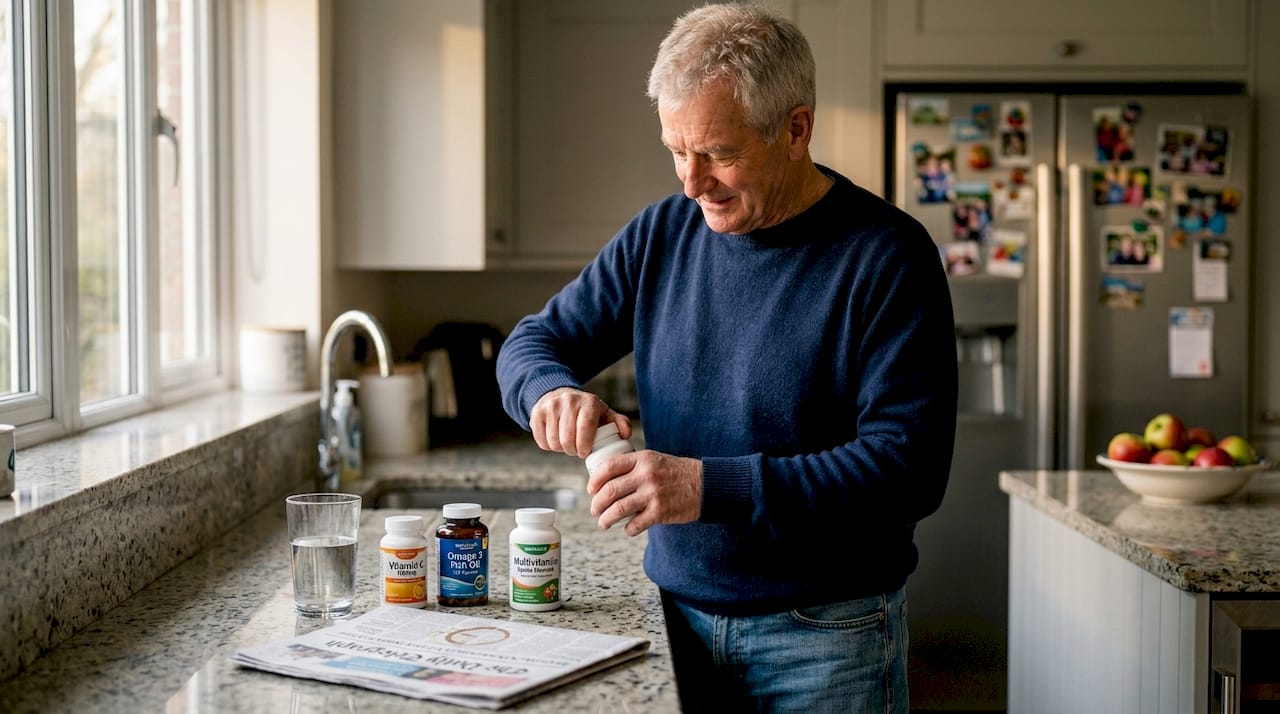
Creatine supplementation paired with regular exercise represents another evidence-backed strategy. Multiple studies confirm that creatine enhances muscle strength and functional outcomes in older adults through several mechanisms. It replenishes ATP stores more rapidly during exercise, supports cellular energy metabolism, and may possess neuroprotective properties that extend beyond muscle tissue.
The combination of creatine and HMB creates particularly impressive results. A recent randomised controlled trial demonstrated that combined supplementation at 3g each daily produces rapid improvements in functional strength independent of muscle mass gains. This finding is crucial because it shows you can experience meaningful strength improvements relatively quickly, even if muscle size changes take longer to manifest.
Supplement comparison for muscle health
| Supplement | Daily dose | Primary mechanism | Key benefit |
|---|---|---|---|
| HMB | 3g | Reduces muscle breakdown | Preserves lean mass |
| Creatine | 3-5g | Enhances ATP production | Improves strength |
| Combined HMB + Creatine | 3g each | Dual pathway support | Rapid functional gains |
| Whey protein | 20-30g | Provides amino acids | Supports synthesis |
These supplements form a solid foundation, but consistency matters enormously. Taking HMB or creatine sporadically won’t deliver the cumulative benefits observed in clinical trials. You need sustained supplementation paired with regular resistance training to achieve meaningful results.
Pro Tip: Start with creatine and HMB together if you’re beginning a strength training programme. The combined approach delivers faster functional improvements that help maintain motivation during the initial weeks when visible muscle changes haven’t yet occurred.
Timing your supplementation strategically can optimise absorption and effectiveness. Take creatine post-workout when insulin sensitivity peaks, allowing better cellular uptake. HMB works well taken throughout the day in divided doses to maintain steady blood levels. Both supplements show excellent safety profiles in older adults when used at recommended dosages.
The Longevity Core Bundle combines several evidence-based compounds in convenient formulations designed specifically for adults prioritising healthy ageing. This approach simplifies supplementation whilst ensuring you receive clinically effective doses of key ingredients.
Supporting overall healthy ageing with multi-bioactive supplements and antioxidants
Beyond muscle-specific supplements, several compounds support broader aspects of healthy ageing including immune function, cellular health, and biological age markers. These supplements work through complementary pathways to address multiple ageing hallmarks simultaneously.
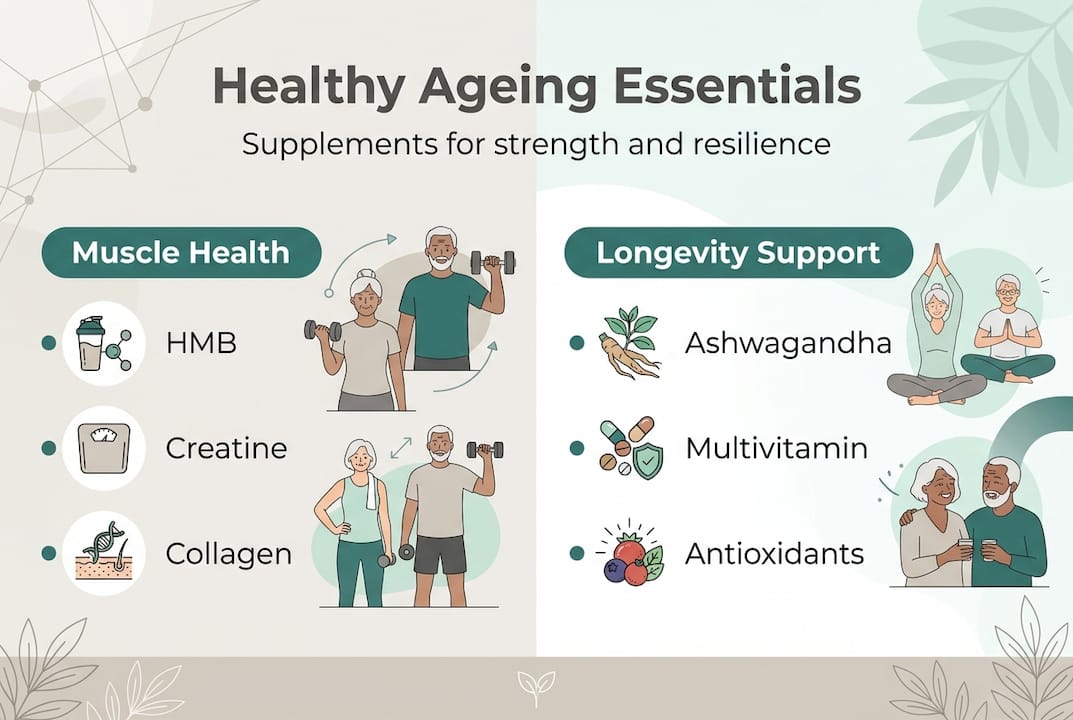
Ashwagandha has emerged as a particularly promising adaptogenic herb for healthy ageing. Research indicates that ashwagandha mitigates oxidative stress and inflammaging through multiple mechanisms. This ancient herb modulates cortisol levels, supports mitochondrial function, and enhances antioxidant enzyme activity. Clinical studies show improvements in vitality, stress resilience, and overall wellbeing in adults over 50.
Collagen amino acid supplementation offers intriguing benefits that extend beyond skin health. A groundbreaking study found that collagen amino acids reduce biological age markers whilst improving skin elasticity and grip strength indicators. This suggests collagen supplementation may influence fundamental ageing processes at the cellular level, not just cosmetic outcomes.
Daily multivitamin-mineral supplements provide foundational micronutrient support that becomes increasingly important with age. The landmark COSMOS trial demonstrated that multivitamin supplementation modestly slows epigenetic age acceleration in older adults. Whilst the effect size is modest, this represents one of the first interventions shown to influence epigenetic ageing clocks in humans.
Multi-bioactive supplements containing synergistic blends of vitamins, amino acids, and antioxidants show particular promise. Research on postmenopausal women found that multi-bioactive formulations enhance immune function and reduce oxidative stress markers significantly. These comprehensive formulations address multiple ageing pathways simultaneously rather than targeting single mechanisms.
Multi-bioactive supplement benefits
| Supplement type | Key components | Primary benefit | Evidence strength |
|---|---|---|---|
| Ashwagandha | Withanolides | Reduces stress and inflammation | Strong |
| Collagen peptides | Amino acids | Supports skin and connective tissue | Moderate |
| Multivitamin-mineral | Essential micronutrients | Slows epigenetic ageing | Moderate |
| Multi-bioactive blend | Vitamins, amino acids, antioxidants | Enhances immunity | Strong |
Combining antioxidants and bioactives with targeted muscle supplements creates synergistic benefits greater than individual compounds alone. Antioxidants help neutralise the oxidative stress generated during exercise, potentially improving recovery. Meanwhile, amino acids from collagen supplement the protein synthesis supported by HMB and creatine.
Pro Tip: Consider rotating your antioxidant sources rather than taking identical supplements daily. Different antioxidants work through distinct mechanisms, so varying your intake between vitamin C, vitamin E, polyphenols, and carotenoids provides broader protective coverage against oxidative damage.
The relationship between nutrition and healthier ageing extends beyond supplementation alone. A colourful, varied diet rich in phytonutrients provides compounds that supplements can’t fully replicate. View supplements as enhancing an already solid nutritional foundation rather than compensating for poor dietary habits.
Timing matters for certain supplements. Fat-soluble vitamins (A, D, E, K) absorb best when taken with meals containing dietary fat. Water-soluble vitamins like B-complex and vitamin C can be taken anytime but may cause mild stomach upset on an empty stomach. Collagen peptides show good absorption whether taken with or without food.
What to avoid and safety tips for anti-ageing supplements
The anti-ageing supplement market includes numerous products with impressive marketing claims but questionable evidence. Understanding which compounds to avoid protects both your health and your wallet from ineffective or potentially harmful products.
NAD+ precursors like nicotinamide riboside (NR) and nicotinamide mononucleotide (NMN) have generated enormous enthusiasm based on promising animal research. These supplements do raise NAD+ levels in humans, but NAD+ boosters lack proven longevity benefits in human trials. More concerning, emerging research suggests elevated NAD+ might promote cancer cell growth by fuelling their aggressive metabolism.
The cancer concern isn’t theoretical. Tumour cells have extremely high energy demands and rely heavily on NAD+ for their rapid growth and proliferation. Whilst healthy cells also need NAD+, providing abundant NAD+ precursors could potentially accelerate existing cancers that haven’t yet been detected. This risk-benefit profile makes NAD+ supplementation questionable for healthy ageing purposes.
Senolytic supplements represent another category with concerning safety profiles. Compounds like fisetin and quercetin show promise in laboratory studies for eliminating senescent cells, but senolytic supplements have low doses and poor regulation. The doses used in human trials far exceed what’s available in commercial supplements, making their effectiveness doubtful.
These supplements also carry significant interaction risks with common medications. Quercetin can interfere with blood thinners, blood pressure medications, and certain antibiotics. Fisetin may interact with chemotherapy drugs and immunosuppressants. Without clinical oversight, you risk serious adverse effects from unmonitored supplement-drug interactions.
Key supplements to approach with caution or avoid:
- NAD+ precursors (NR, NMN) due to unclear human benefits and potential cancer promotion risks
- Senolytic compounds (fisetin, quercetin at high doses) lacking proper regulation and safety data
- Rapamycin analogues marketed as supplements despite being prescription medications
- Metformin supplements for non-diabetics without medical supervision
- High-dose resveratrol products with poor bioavailability and limited human evidence
Experts consistently recommend prioritising supplements with robust clinical evidence in human populations similar to yourself. The supplements discussed earlier (HMB, creatine, ashwagandha, multivitamins) have accumulated substantial safety data over decades of use in older adults.
“The anti-ageing supplement space is rife with products based on preliminary research that hasn’t translated to human benefits. Stick with compounds that have completed rigorous clinical trials in older adults and always consult your doctor before starting new supplements, especially if you take medications or have health conditions.”
Always inform your healthcare provider about all supplements you’re taking, including seemingly benign products like multivitamins. This allows them to screen for potential interactions with your medications and medical conditions. Some supplements can affect blood test results, so mention them before laboratory work.
Quality matters enormously in supplement selection. Choose products from reputable manufacturers that conduct third-party testing for purity and potency. Look for certifications from organisations like NSF International or Informed Choice that verify products contain what labels claim without harmful contaminants.
The Bryan Johnson longevity experiments demonstrate both the potential and the pitfalls of aggressive anti-ageing supplementation. Whilst some of his approaches show promise, others remain highly experimental and potentially risky for typical adults seeking healthy ageing.
Support your healthy ageing journey with Vivetus® supplements
Navigating the complex supplement landscape becomes significantly easier when you choose evidence-backed formulations from trusted sources. Vivetus® specialises in scientifically formulated supplements designed to support multiple ageing pathways safely and effectively.
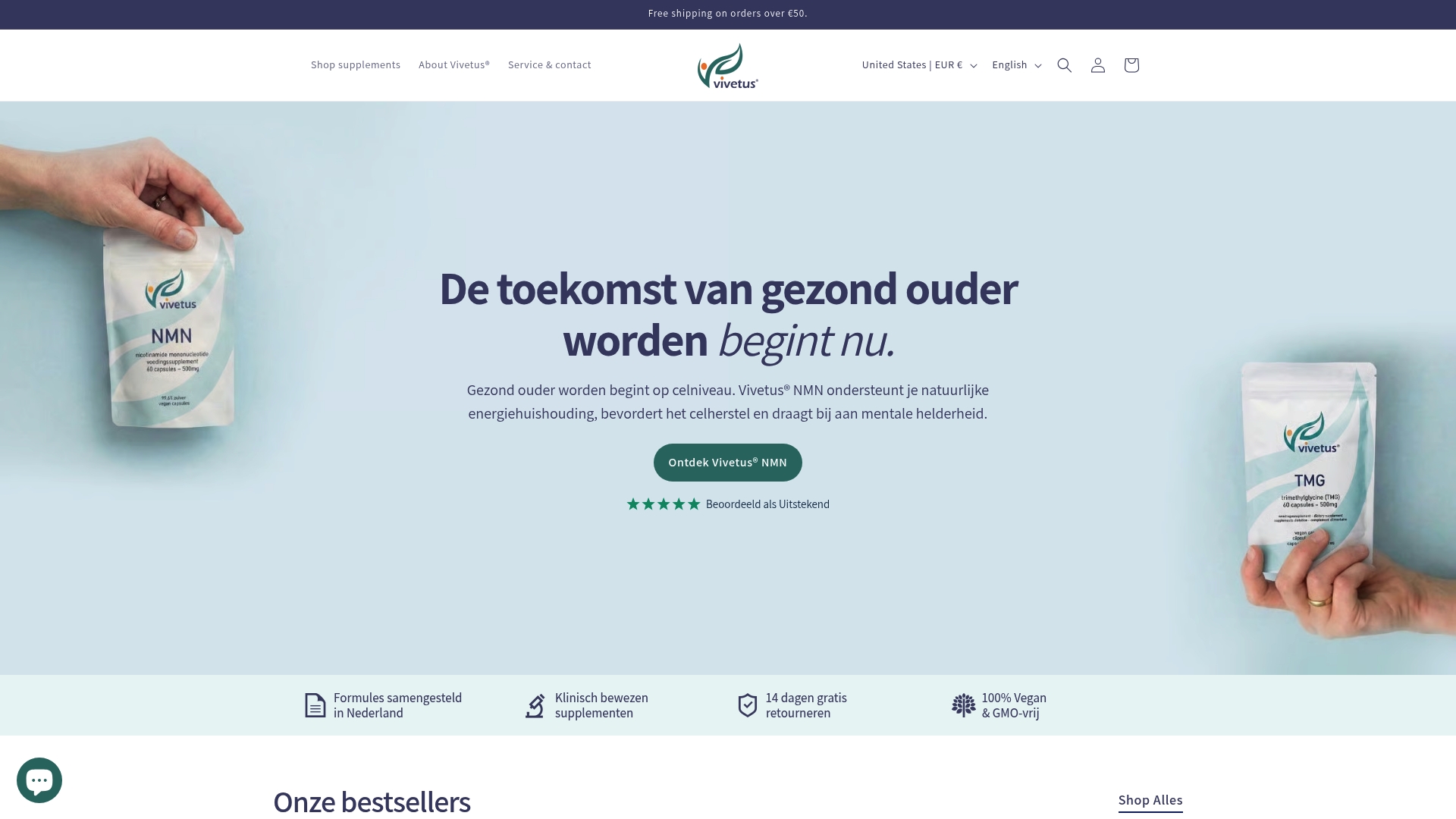
The Energy & Vitality Bundle combines clinically validated ingredients at effective doses to enhance muscle strength, energy production, and overall vitality. This comprehensive approach addresses the interconnected aspects of healthy ageing rather than targeting isolated symptoms. Each ingredient has been selected based on robust clinical evidence in adults over 50.
The Vivetus® TMG supplement provides targeted support for methylation and homocysteine balance, processes that become increasingly important for cellular health during ageing. TMG (trimethylglycine) acts as a methyl donor, supporting numerous biochemical reactions essential for DNA repair, neurotransmitter synthesis, and cardiovascular health.
Explore the full range of Vivetus supplements as part of a holistic healthy ageing strategy that integrates quality supplementation with proper nutrition, regular exercise, and lifestyle optimisation. This comprehensive approach delivers synergistic benefits that exceed what any single intervention can achieve alone.
FAQ
What supplements have the strongest evidence for supporting healthy ageing?
HMB at 3g daily, creatine at 3-5g daily, and ashwagandha show the most robust clinical evidence for supporting muscle strength, vitality, and healthy ageing in adults over 50. These compounds have been studied extensively in human trials with consistent positive outcomes. Daily multivitamin-mineral supplements also provide foundational support with emerging evidence for slowing biological ageing markers.
How do exercise and supplementation work together to improve vitality?
Exercise creates the physiological stimulus that supplements enhance and support. Resistance training triggers muscle protein synthesis, which HMB and creatine amplify through complementary mechanisms. Exercise also improves insulin sensitivity, allowing better nutrient uptake into cells. Without regular physical activity, even the best supplements deliver diminished benefits compared to their potential.
Are NAD+ boosters safe and effective for older adults?
NAD+ precursors like NR and NMN raise NAD+ levels but lack proven longevity benefits in human trials. More concerning, emerging research suggests elevated NAD+ might promote cancer cell growth by fuelling their metabolism. Until more safety data emerges, most experts recommend avoiding NAD+ boosters for general healthy ageing purposes.
What lifestyle changes complement supplements to promote healthy ageing?
Regular resistance training two to three times weekly provides the foundation that supplements enhance. Prioritise seven to eight hours of quality sleep nightly to support cellular repair processes. Manage stress through proven techniques like meditation or yoga, as chronic stress accelerates biological ageing. Maintain social connections and mental stimulation, both of which independently support cognitive health and longevity.
Should I consult my doctor before starting new ageing supplements?
Absolutely, especially if you take medications or have existing health conditions. Many supplements interact with common medications like blood thinners, blood pressure drugs, and diabetes medications. Your doctor can screen for potential interactions and ensure supplements align with your specific health situation. This consultation becomes particularly important for experimental compounds like senolytics or high-dose antioxidants. Choosing supplements wisely requires professional guidance tailored to your individual circumstances.
How long before I notice results from healthy ageing supplements?
Timelines vary by supplement and outcome measured. Creatine and HMB combinations can improve functional strength within four to six weeks when paired with exercise. Ashwagandha typically requires eight to twelve weeks for noticeable stress resilience and vitality improvements. Collagen peptides may take three to six months to influence skin elasticity and biological age markers. Consistency matters more than any single dose, so commit to at least twelve weeks before evaluating effectiveness.