

How to monitor supplement effectiveness: a practical guide
TL;DR:
- Monitoring supplement effectiveness involves a structured Test-Supplement-Retest cycle using blood biomarkers, wearable data, and symptom tracking. This process ensures measurable, verifiable results over 8 to 12 weeks, guiding precise supplementation and avoiding unnecessary expenses. Combining objective testing with subjective and wearable insights provides a comprehensive view of physiological and experiential benefits.
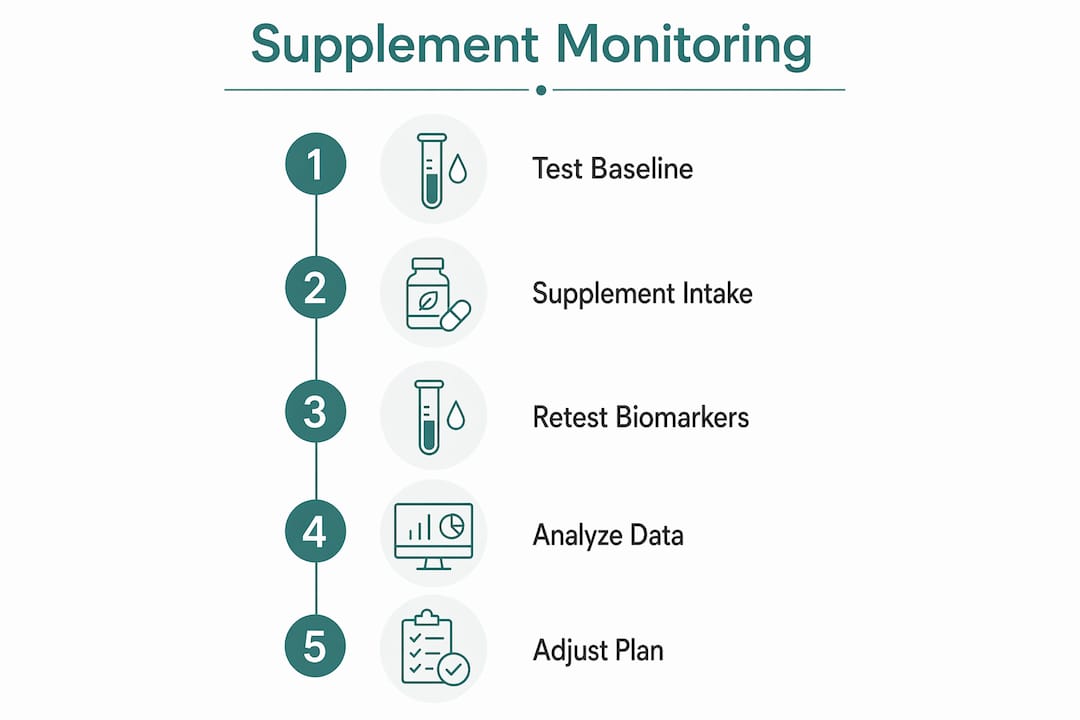
Monitoring supplement effectiveness is defined as the structured process of combining blood biomarker testing, wearable physiological data, and symptom tracking to verify that a supplement produces measurable changes in your body. Without this process, you are spending money on products whose impact remains entirely unknown. The gold standard method is the Test-Supplement-Retest cycle: establish a baseline, supplement consistently for 8 to 12 weeks, then retest the same markers. Tools such as the Health3 app, Prova, and Lola Health make this process accessible to anyone willing to track with discipline.
How to monitor supplement effectiveness with objective testing
Objective testing is the most reliable way to assess supplement efficacy because it removes guesswork entirely. Blood biomarker testing gives you a number before and after supplementation, making change visible and verifiable. The Test-Supplement-Retest cycle is the recognised gold standard: test at baseline, supplement for 8 to 12 weeks, then retest the targeted markers.

Choosing the right biomarkers depends on your supplement goals. Vitamin D supplementation calls for serum 25(OH)D testing. Iron or ferritin levels confirm whether an iron supplement is correcting a deficiency. B12 and folate panels apply to those taking methylated B vitamins. Omega-3 index testing, which measures the percentage of EPA and DHA in red blood cell membranes, requires 12 to 16 weeks before retesting because red blood cell lifespan dictates how quickly the index shifts. This means patience is not optional for omega-3 users. It is physiologically required.
One distinction that matters enormously is the difference between normal and optimal ranges. A vitamin D result of 32 ng/mL sits within the standard laboratory reference range, yet functional medicine perspectives place the optimal target at 40 to 60 ng/mL for health and performance. Interpreting your results against optimal rather than merely normal ranges gives you a more accurate picture of whether your supplement is actually working.
The table below summarises common supplements, the biomarkers to test, and appropriate retesting windows.
| Supplement | Biomarker to test | Retest timing |
|---|---|---|
| Vitamin D3 | Serum 25(OH)D | 8 to 12 weeks |
| Iron / ferritin | Serum ferritin, haemoglobin | 8 to 12 weeks |
| Vitamin B12 | Serum B12, homocysteine | 8 to 12 weeks |
| Omega-3 (EPA/DHA) | Omega-3 index | 12 to 16 weeks |
| Magnesium | RBC magnesium | 8 to 12 weeks |
| Zinc | Serum zinc | 8 to 12 weeks |
Pro Tip: Before spending on a supplement, test first. Supplements are often ineffective because users skip verifying a baseline deficiency. Testing first guides precise, cost-effective supplementation rather than guesswork.
How can subjective tracking and wearable data complement objective testing?
Blood tests tell you what changed physiologically. Subjective tracking and wearable data tell you how those changes feel in daily life. Combining both data types reduces placebo bias and captures quality-of-life benefits that blood panels cannot measure, such as improved sleep, reduced fatigue, or better mood stability.
For subjective tracking, focus on no more than two to four metrics. Tracking too many variables creates noise and reduces your ability to spot genuine patterns. Rate each metric daily on a simple 1 to 10 scale and note the score at the same time each day. Meaningful change is defined as a shift of at least 0.75 to 1.0 points on that scale, sustained over several weeks. A single good day is not a signal. A consistent upward trend is.
Wearable devices such as the Garmin Fenix, Oura Ring, or Whoop strap add an objective layer to subjective experience. The metrics most relevant to supplement monitoring include:
- Heart rate variability (HRV): A sustained increase of 5ms or more over weeks suggests improved autonomic recovery.
- Resting heart rate: A downward trend of 2 to 3 beats per minute over the trial period indicates improved cardiovascular adaptation.
- Sleep duration and quality: Track deep sleep and REM percentages, not just total hours. A 5-point improvement in sleep quality score over the trial window is considered meaningful.
- Subjective energy rating: Logged each morning before caffeine, on a 1 to 10 scale.
Pro Tip: Keep a confounder log alongside your tracking data. Record stress events, illness, travel, alcohol consumption, and changes in training load. Without this log, you cannot distinguish a genuine supplement effect from a lifestyle event. A simple daily note in a notebook or app is sufficient.
What is the step-by-step process to design a supplement trial?
A properly designed supplement experiment follows three phases: baseline tracking, active supplementation, and an optional washout phase. Each phase serves a distinct purpose, and skipping any one of them weakens your conclusions.
Here is the process in full:
- Establish your baseline. Track your chosen biomarkers and subjective metrics for two to four weeks before starting the supplement. This gives you a stable reference point.
- Start supplementation. Begin the supplement at the recommended dose. Record the start date, product name, dose, and timing in your log.
- Maintain consistent lifestyle factors. Keep diet, exercise, sleep schedule, and other supplements stable throughout the trial. Any significant change contaminates your data.
- Log daily. Record your subjective metrics and any confounders every day. Consistency here is non-negotiable.
- Complete the full trial window. Most chronic-use supplements require 3 to 12 weeks before physiological changes become detectable. Do not end the trial early because you feel better or worse.
- Retest biomarkers. At the end of the active phase, repeat the same blood tests from your baseline.
- Optional washout phase. Stop the supplement for two to four weeks and observe whether your metrics revert toward baseline. This step strengthens your conclusion that the supplement, not another variable, drove the change.
The single most important rule in trial design is the one-at-a-time principle. Testing one supplement per trial period with stable lifestyle factors is the only way to draw valid conclusions. Introducing a new supplement, changing your diet, and starting a new exercise programme simultaneously makes it impossible to attribute any change to the supplement.
Common mistakes to avoid include stopping the trial prematurely, failing to log confounders, and changing the dose mid-trial without documenting it. Each of these errors introduces uncertainty that cannot be corrected after the fact.
How to interpret your supplement tracking data and make adjustments
Interpreting your data means comparing your baseline averages against your active phase averages for each chosen metric. Calculate the mean for each metric across the baseline period and the final two weeks of the active phase. Look for consistent directional change, not single-day outliers.
The table below outlines common scenarios and the appropriate response.
| Scenario | What it likely means | Recommended response |
|---|---|---|
| Biomarker improved, subjective score unchanged | Physiological change without felt benefit | Continue and extend observation period |
| Subjective score improved, biomarker unchanged | Possible placebo effect | Review dose, timing, and absorption factors |
| Both biomarker and subjective score improved | Strong evidence of supplement benefit | Continue current protocol |
| No change in either metric after 12 weeks | Supplement may not be indicated | Investigate deficiency status, absorption, or product quality |
| Metrics improved then reverted after washout | Supplement effect confirmed | Reinstate supplementation |
When biomarkers improve but subjective scores do not, the most common explanations are insufficient trial length, poor absorption, or a dose that corrects the deficiency without yet producing felt effects. Magnesium, for example, often requires eight weeks before sleep quality improvements become consistent, even when serum levels normalise earlier.
Confirmation bias is the most common analytical error. Users who feel better after two weeks frequently stop tracking and conclude the supplement works, without completing the full trial or retesting biomarkers. Pre-defining your trial length before you start, and committing to daily documentation regardless of how you feel, is the only reliable defence against this. You can build a solid foundation for this process by following a structured supplement routine from the outset.
Key takeaways
Effective supplement monitoring requires a structured Test-Supplement-Retest cycle combining blood biomarkers, wearable data, and consistent subjective tracking over a minimum of 8 to 12 weeks.
| Point | Details |
|---|---|
| Test before you supplement | Establish blood biomarker baselines to confirm a deficiency exists before spending on a supplement. |
| Use the 8 to 12 week rule | Most nutrients require this window before physiological changes appear in retesting. |
| Track only 2 to 4 metrics | Limiting subjective tracking reduces noise and makes genuine trends easier to identify. |
| Apply the one-at-a-time rule | Testing one supplement per trial period is the only way to attribute results accurately. |
| Compare optimal, not just normal, ranges | Standard lab reference ranges often understate the levels associated with meaningful health benefit. |
Why I think most people are measuring supplements the wrong way
Most people assess whether a supplement works by asking themselves how they feel after a week or two. That approach is almost guaranteed to produce a wrong answer. The placebo response is real, well-documented, and particularly strong for energy and mood supplements. Feeling better after starting a new supplement tells you very little about whether the supplement caused that improvement.
What I have found, working through this process with a range of supplements over several years, is that the data almost always surprises you. Supplements you were convinced were working sometimes show no biomarker movement after 12 weeks. Others you had written off produce clear, measurable shifts in ferritin or HRV that you would never have noticed without testing.
The other mistake I see consistently is neglecting foundational health factors before expecting a supplement to perform. Poor digestion, chronic sleep deprivation, and high stress all blunt supplement absorption and physiological response. Foundational health factors like digestion and sleep quality must be addressed first, or you are testing a supplement in conditions that prevent it from working. Fixing sleep before adding a magnesium supplement, for instance, gives you a far cleaner signal.
The technology available now, from Oura Ring to Health3 and Prova, removes most of the friction from this process. There is no longer a reasonable excuse for guessing. A structured approach to tracking supplement benefits gives you data you can act on, rather than impressions you cannot verify.
— Jord
How Vivetus supports your supplement monitoring journey

Vivetus provides access to a curated range of scientifically supported supplements designed for healthy ageing and sustained vitality. Beyond the products themselves, the Vivetus blog offers practical guidance on comparing supplement types and building monitoring workflows that produce reliable results. Whether you are establishing your first biomarker baseline or refining a protocol you have been running for months, Vivetus gives you the product quality and informational resources to make your supplementation evidence-based. Explore the full range at Vivetus and take the first step toward supplementation you can actually verify.
FAQ
What is the best way to know if a supplement is working?
The most reliable method is the Test-Supplement-Retest cycle: test relevant blood biomarkers at baseline, supplement consistently for 8 to 12 weeks, then retest the same markers. Combining this with daily subjective tracking and wearable data gives you the most complete picture.
How long should you take a supplement before evaluating results?
Most supplements require a minimum of 8 to 12 weeks before blood biomarker changes become detectable. Omega-3 index testing requires 12 to 16 weeks due to red blood cell turnover rates.
Can wearable devices help track supplement effectiveness?
Yes. Devices such as the Oura Ring, Whoop, and Garmin wearables provide HRV, resting heart rate, and sleep quality data that can reveal physiological changes not captured by blood tests alone. A sustained HRV increase of 5ms or more over the trial period is considered a meaningful signal.
Why do some supplements show no effect even after consistent use?
The most common reasons are the absence of a confirmed baseline deficiency, poor absorption, an insufficient dose, or foundational health factors such as poor digestion or sleep that blunt the supplement’s physiological impact. Testing before supplementing removes the first cause entirely.
What is the difference between a normal and an optimal biomarker result?
Standard laboratory reference ranges define what is statistically normal in the general population. Optimal ranges, used in functional medicine, reflect the levels associated with health and performance. Vitamin D, for example, is considered normal above 30 ng/mL but optimal between 40 and 60 ng/mL.