
Evidence-based supplement guide for healthy ageing
TL;DR:
- Supplements should target confirmed nutrient gaps and complement a balanced, whole-food diet.
- Over-supplementing, especially with fat-soluble vitamins, poses significant health risks.
- Personalize supplement use through diet assessment, medical consultation, and regular monitoring.
Navigating supplement advice after 50 can feel overwhelming. One article recommends a dozen products; another warns against them entirely. The reality sits somewhere more measured. Your body’s nutritional needs do shift with age, absorption rates change, and certain deficiencies become genuinely more common. But the supplement market is also full of products that promise far more than the science supports. This guide cuts through the noise with practical, evidence-based information to help you make safer, smarter decisions about what you take and why, without unnecessary risk or wasted expenditure.
Table of Contents
- What you need to know before starting supplements
- Essential supplements for healthy ageing: science and safety
- How to personalise your supplement choices step by step
- Common mistakes and how to avoid them
- What most healthy ageing guides don’t tell you
- Take the next step towards healthy ageing
- Frequently asked questions
Key Takeaways
| Point | Details |
|---|---|
| Prioritise food first | Supplements should fill dietary gaps, not replace a nutrient-rich diet. |
| Use evidence-based supplements | Focus on supplements with strong science for your age group and health status. |
| Avoid over-supplementation | Too much of certain nutrients can be harmful, so stick to recommended doses. |
| Monitor and personalise choices | Work with a healthcare professional to review your needs and adjust your regimen. |
What you need to know before starting supplements
Before reaching for any supplement, it is worth understanding why food remains the foundation of good nutrition. A varied, whole-food diet provides nutrients in forms your body is best equipped to use, alongside fibre, phytonutrients, and compounds that supplements simply cannot replicate. Vegetables, legumes, oily fish, whole grains, and dairy or fortified alternatives all contribute to a profile of nutrition that supports healthy ageing more reliably than any capsule.
When might supplements actually be appropriate? The clearest cases involve confirmed dietary gaps, age-related changes in absorption, or a clinical recommendation from your doctor. For instance, stomach acid decreases with age, which can reduce your ability to absorb certain nutrients such as vitamin B12 from food. Similarly, reduced sun exposure or skin changes may affect vitamin D synthesis. In these situations, targeted supplementation makes practical sense.
The risks of over-supplementing are often underestimated. Fat-soluble vitamins such as A, D, E, and K accumulate in body tissue and can reach toxic levels if taken in excess. Even water-soluble supplements taken in very high doses can cause harm. The principle from Harvard Health is clear: start with diet, supplement only to fill gaps or when medically indicated, and avoid excess dosing. This is the standard to follow.
Key principles before you start:
- Assess your current diet honestly before adding any supplement
- Discuss your plans with your GP or pharmacist, particularly if you take prescription medicines
- Never exceed recommended dosages without clinical supervision
- Be cautious about combining multiple supplement products that may contain overlapping nutrients
- Request blood tests where appropriate to confirm genuine deficiencies rather than guessing
“Supplements are not a shortcut to good health. They work best as a targeted tool, used alongside a nutritious diet and active lifestyle, not as a replacement for either.”
When choosing supplements wisely, the most important step is identifying whether you have an actual need, not simply following a popular trend. You can also review supplement safety tips to better understand the risk profile of products you are considering.
Pro Tip: Before purchasing any supplement, write down what specific outcome you are hoping for, and check whether peer-reviewed evidence actually supports that use. If the evidence is weak, reconsider.
Essential supplements for healthy ageing: science and safety
Once the groundwork and safety mindset are in place, it is worth examining which supplements carry meaningful scientific support for people over 50 and how they fit into a realistic healthy ageing plan.
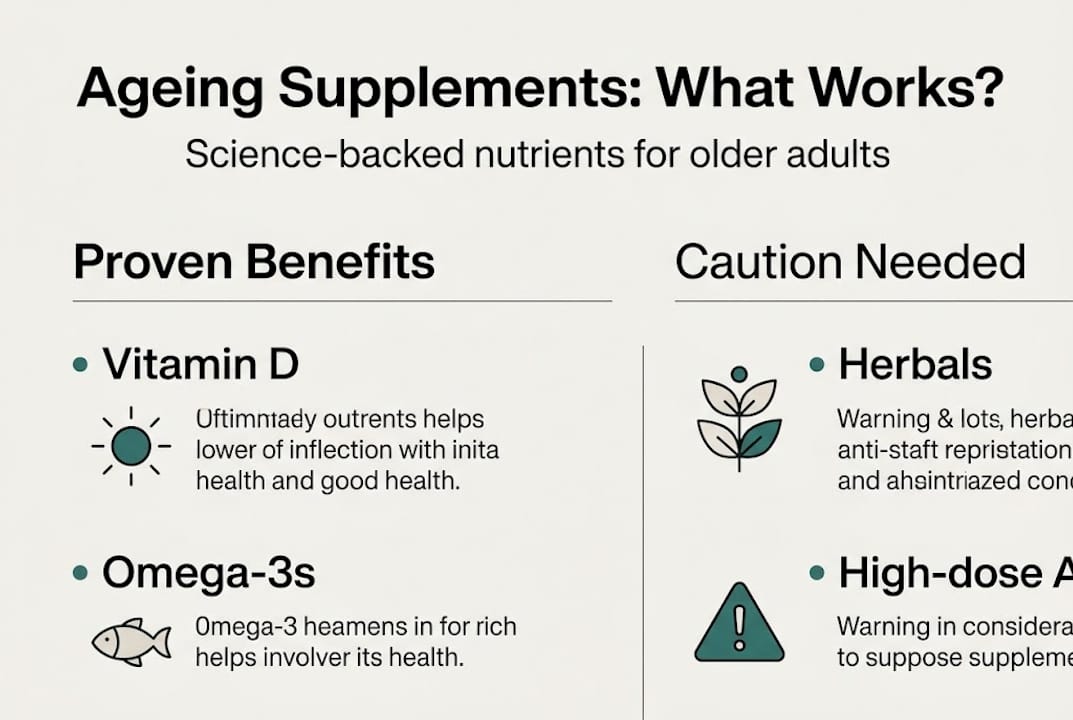
Calcium and vitamin D are among the most consistently recommended nutrients for older adults. Bone density naturally declines after 50, and women experience more rapid losses following the menopause. According to Mayo Clinic guidance, adults over 51 should aim for 1,200 mg of calcium per day from all sources combined, including food. Supplementing beyond dietary intake is only beneficial up to a point, and excessive calcium from supplements has been associated with cardiovascular concerns in some research. The key is not to exceed 2,000 mg per day from all sources.
Vitamin D works closely with calcium and also supports immune function and muscle strength. A randomised controlled trial found that daily vitamin D supplementation may help slow biological ageing in adults over 50. This is one of the stronger pieces of evidence in healthy ageing research, though the practical effects remain moderate.
Vitamin B12 is a common concern as people age, partly because stomach acid reduction can impair absorption of the form found naturally in food. However, many people over 60 get enough B12 from diet alone, and supplementation is generally unnecessary unless blood tests confirm a deficiency. This is an important nuance that marketing materials often overlook.

Omega-3 fatty acids from fish oil are widely studied for cardiovascular and cognitive health. Evidence suggests benefit for heart health at adequate doses, though effects on cognitive decline are less conclusive. Omega-3 supplements are generally well-tolerated but can interact with blood-thinning medications, so check with your pharmacist first.
| Supplement | Evidence strength | Typical need over 50 | Key caution |
|---|---|---|---|
| Vitamin D | Strong | Common, especially in northern climates | Avoid very high doses |
| Calcium | Moderate | Often needed if dairy is limited | Do not exceed 2,000 mg total |
| Vitamin B12 | Moderate | Only if confirmed deficient | Test first |
| Omega-3 | Moderate | May benefit heart health | Check medication interactions |
| Multivitamin | Weak to mixed | Only if diet is genuinely poor | Risk of excess fat-soluble vitamins |
For a closer look at supplements with proven results, the evidence base is more selective than supplement marketing implies. A comprehensive supplements guide can help you map specific nutrients to your individual health priorities.
A useful reference point: most clinical bodies recommend supplementing specific nutrients only when warranted, rather than taking broad-spectrum products as insurance. Your money and your health are both better served by targeted, evidence-led choices.
How to personalise your supplement choices step by step
Understanding what the main supplement categories offer is one thing; tailoring that knowledge to your individual circumstances is another. Here is a practical sequence for making informed choices.
-
Audit your current diet. Spend three to seven days tracking what you eat across different meal types. Look for consistent gaps, for example, whether you rarely eat oily fish, dairy products, or leafy green vegetables. Apps or simple food diaries both work well for this.
-
List your health conditions and medications. Some supplements interact directly with prescription medicines. Vitamin K affects anticoagulants; calcium competes with some antibiotics; St John’s Wort affects multiple drug classes. Your pharmacist is an underused resource here and can flag interactions quickly.
-
Discuss with your GP or nutritionist. Request blood tests for nutrients where deficiency is clinically relevant to your situation. The most useful panels for over-50s often include vitamin D, B12, iron, folate, and calcium. According to AARP’s guidance, most supplement decisions should start from symptom review, dietary analysis, and laboratory confirmation of deficiency where possible.
-
Read supplement labels carefully. Look at the form of the nutrient (not all forms are equally well absorbed), the dose per serving, the number of servings per day, and what other ingredients are included. Many products contain fillers, allergens, or nutrients already present in other products you take.
-
Start with one supplement at a time. If you introduce multiple new supplements simultaneously and experience a side effect, you will not be able to identify the cause. Add one product, observe for two to four weeks, then consider adding another if needed.
-
Monitor and reassess every three to six months. Needs change. A supplement that was appropriate following a diagnosis of low vitamin D may no longer be necessary once levels are restored through diet and sun exposure.
A step-by-step supplement guide can support this process with more detailed nutritional information.
| Approach | Best for | Risk level | Cost |
|---|---|---|---|
| Diet-first, no supplements | Good overall diet, no deficiency | Lowest | Lowest |
| Single targeted nutrient | Confirmed specific deficiency | Low if dosed correctly | Low to moderate |
| Combination product | Multiple confirmed gaps | Moderate; check overlap | Moderate |
| Broad-spectrum multivitamin | Poor diet, limited food variety | Moderate; excess risk | Variable |
Pro Tip: If your GP is hesitant to order a full nutritional panel, a private blood test from a registered laboratory is relatively affordable and can give you a clear baseline before spending on supplements.
Common mistakes and how to avoid them
Even with a well-considered plan, certain pitfalls are surprisingly easy to fall into. Recognising them in advance is the most efficient form of prevention.
Using supplements as a substitute for food. This is one of the most common and most costly errors. A supplement cannot replicate the nutritional complexity of a meal. Studies consistently show that nutrients in isolation behave differently from nutrients consumed within whole foods. Health.com’s review reinforces that supplements are not substitutes for a good diet and can be inappropriate based on individual health status or medical interactions. If your diet is genuinely inadequate, supplements are a temporary support while you address the root cause, not a permanent replacement.
Exceeding recommended doses. It seems logical that more of a beneficial nutrient would produce more benefit. In practice, this is rarely true and sometimes dangerous. Vitamin A toxicity can cause liver damage and bone loss. Excess vitamin D leads to hypercalcaemia, which affects kidney and heart function. Iron overload is harmful for men and post-menopausal women who are not deficient. Always check the upper tolerable intake level for any supplement you take.
Assuming “natural” means safe. Many herbal and botanical supplements carry real risks, particularly for older adults on multiple medications. Ginkgo biloba, for instance, can increase bleeding risk. Valerian interacts with sedative medications. The natural origin of a product does not determine its safety profile.
Taking duplicate nutrients across multiple products. It is easy to take a multivitamin, a separate vitamin D supplement, a calcium tablet, and a fortified protein shake, and end up with doses well above recommended limits without realising it. Add up all sources before assuming you need to add more.
Common mistakes to avoid:
- Skipping regular health checkups because you are “already taking supplements”
- Buying supplements based on celebrity endorsements or social media trends rather than evidence
- Storing supplements incorrectly (heat and humidity degrade potency)
- Discontinuing prescribed medications in favour of supplements without medical advice
- Failing to inform your doctor about all supplements during appointments
“The question is not whether a supplement is good or bad in isolation. The question is whether it is appropriate for you, at your current health status, alongside everything else you take and eat.”
For a thorough overview of safe practices, the supplement safety guidelines provide structured, practical information to reduce risk.
What most healthy ageing guides don’t tell you
Most articles on ageing and supplements focus on lists: which nutrients to take, at what dose, and for which conditions. That is useful to a point. But there is a broader reality that rarely gets adequate attention.
The evidence for most supplements shows modest effects in carefully controlled trials. In the real world, where diet varies daily, sleep is inconsistent, and stress levels fluctuate, the effects are often smaller still. Health.com’s clinical review notes that media and expert lists can overemphasise supplements, while major health bodies consistently state that benefits are modest and do not substitute for lifestyle.
The activities that most reliably support health after 50, which include regular physical activity, adequate sleep, stress management, strong social connections, and a diet rich in vegetables, legumes, and whole grains, are not particularly profitable to market. Supplements are. That commercial reality shapes much of the advice available online.
Restraint is not a failure of ambition. Taking fewer, well-chosen supplements based on confirmed need is a more sophisticated strategy than stacking every product associated with longevity. The balanced ageing approaches that hold up under scrutiny are the ones that treat supplements as one small part of a much larger picture.
Scepticism is a useful tool here. Ask what the evidence actually shows, who funded the study, and whether the claimed effect is clinically meaningful in your circumstances.
Take the next step towards healthy ageing
If this guide has helped clarify your thinking, the logical next step is to assess your individual situation and identify where targeted supplementation might genuinely support your health goals.
At Vivetus®, you will find curated, scientifically supported supplement options alongside resources designed specifically for people over 50. The focus is on quality, transparency, and products that are backed by meaningful evidence rather than marketing claims. Whether you are looking to address a confirmed deficiency or simply review your current approach, explore the Vivetus healthy ageing resources to find reliable guidance and trusted supplement options, with free shipping available on orders over €50.
Frequently asked questions
Do I need to take multivitamins for healthy ageing after 50?
Most people do not need a multivitamin if they eat a varied diet. Evidence from trials on multivitamins is mixed, with limited benefits shown for major disease prevention.
How much calcium should people over 50 get each day?
Adults over 50 should aim for 1,000 to 1,200 mg of calcium daily from all sources combined. According to Mayo Clinic recommendations, total intake should not exceed 2,000 mg per day.
Should I take vitamin B12 supplements as I age?
Most older adults do not need B12 supplements unless blood tests confirm a deficiency. B12 supplementation is generally only warranted when dietary intake or absorption is demonstrably insufficient.
Can supplements prevent Alzheimer’s disease or dementia?
There is currently no conclusive evidence that any supplement can prevent Alzheimer’s disease or dementia. The National Institutes of Health guidance on cognitive supplements confirms that no definitive preventive benefit has been established for any currently available product.