
Balanced diet for elderly: essential guide for better ageing
TL;DR:
- Older adults need fewer calories but must focus on nutrient-dense, balanced diets.
- Key food groups include fruits, vegetables, whole grains, dairy, lean proteins, and healthy fats.
- Flexibility and practical adjustments are vital to meet individual health and lifestyle needs.
Eating well is not the same at every stage of life. As the body ages, it requires fewer calories but equal nutrients, which means every meal must work harder. This guide covers what a balanced diet actually means for people aged 65 and over, why the usual advice often falls short, and what both older adults and their caregivers can do differently. From understanding core nutritional principles to practical meal planning strategies, the aim is to give you clear, actionable information that fits real life.
Table of Contents
- Core principles of a balanced diet for elderly people
- Key food groups for a balanced elderly diet
- The importance of nutrient density and protein as we age
- Meal planning tips and real-life adjustments
- The real-world challenge: why one-size-fits-all never works in elderly nutrition
- Discover how Vivetus® supports healthy ageing through nutrition
- Frequently asked questions about balanced diets for the elderly
Key Takeaways
| Point | Details |
|---|---|
| Diets must adapt with age | Elderly people need more nutrients from fewer calories, not just smaller portions. |
| Variety across food groups | Eating from all major food groups supports healthy ageing and better overall wellbeing. |
| Prioritise nutrient density | Choose foods that are high in vitamins, minerals, and protein per calorie for the best results. |
| Plan and adjust | Meal planning with flexible, easy-to-eat options overcomes common age-related challenges. |
Core principles of a balanced diet for elderly people
Many are surprised to learn that the foundations of a balanced diet shift with age. So, what are the core principles for elderly nutrition that truly matter?
The word “balanced” carries a lot of weight. For older adults, it means more than simply eating fruit and vegetables. According to WHO dietary principles, a healthy diet rests on four pillars: adequacy, balance, moderation, and diversity. Each of these is relevant to elderly nutrition in a distinct way.
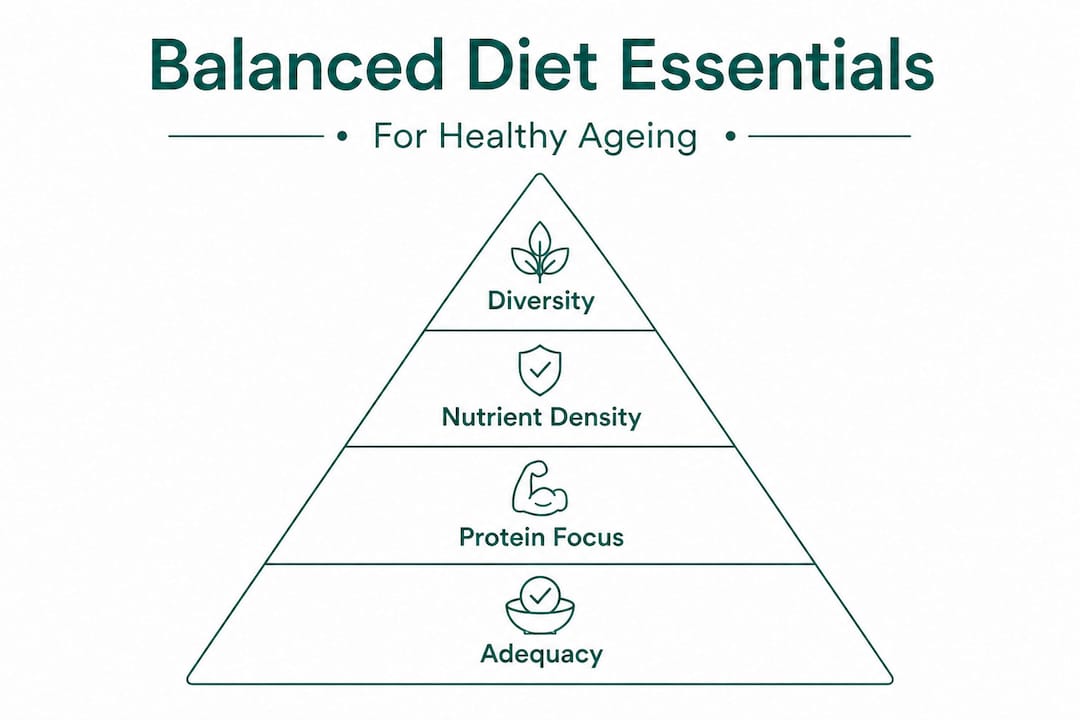
Adequacy means getting enough of every essential nutrient, including vitamins, minerals, protein, fibre, and healthy fats. Balance refers to proportioning the right foods so that no single group dominates. Moderation addresses portion control and limiting foods that can cause harm in excess, such as sodium, sugar, and saturated fat. Diversity encourages a wide range of foods so that the full spectrum of micronutrients is covered.
These four pillars do not operate in isolation. The precise mix of foods that fulfils all four criteria varies considerably by age, health status, activity level, and cultural context. A retired person who walks daily has different needs to one who is largely sedentary or managing a chronic health condition. Caregivers should factor in these differences rather than applying a single template.
“A healthy diet protects against malnutrition in all its forms, as well as non-communicable diseases including diabetes, heart disease, stroke, and cancer.” — World Health Organisation
For those wanting to go further, our supplement guidance for healthy ageing offers additional context on how nutritional support can complement a balanced dietary approach.
| Principle | What it means for older adults |
|---|---|
| Adequacy | Meeting nutrient needs despite lower calorie intake |
| Balance | Appropriate portions from all food groups |
| Moderation | Limiting salt, sugar, and saturated fat |
| Diversity | Wide range of foods to cover all micronutrients |
Focusing on quality and diversity over volume is the central shift for elderly nutrition. Eating a smaller quantity of highly nutritious food is considerably more effective than eating large amounts of lower-quality options.
Key food groups for a balanced elderly diet
With the core pillars in mind, the next step is to understand exactly which types of foods should make up a balanced elderly diet.
Research clearly shows that healthy dietary patterns rich in fruits, vegetables, whole grains, unsaturated fats, nuts, and legumes are linked to greater odds of healthy ageing. This is not a coincidence. These foods supply the micronutrients, fibre, and antioxidants that support organ function, immune health, bone density, and cognitive performance. At the same time, limiting ultraprocessed foods, excess sodium, sugary drinks, and red or processed meats reduces the risk of chronic disease.
The key food groups for older adults include:
- Fruits and vegetables. Aim for colour variety. Dark leafy greens, orange and red vegetables, and berries each bring distinct vitamins, minerals, and plant compounds. Fresh, frozen, or canned (without added salt or sugar) are all suitable.
- Whole grains. Oats, brown rice, wholemeal bread, and barley provide sustained energy, fibre for digestive health, and B vitamins. Refined grains strip away much of this value.
- Dairy and fortified alternatives. Milk, yoghurt, and cheese supply calcium and vitamin D. Those who do not consume dairy should opt for fortified plant-based milks such as oat or soya.
- Lean proteins. Fish (particularly oily fish like salmon or mackerel), poultry, eggs, and lean cuts of meat. Plant sources such as lentils, beans, chickpeas, and tofu are equally valuable and often easier to digest.
- Healthy fats. Olive oil, avocado, and a small handful of nuts or seeds daily support heart health and assist fat-soluble vitamin absorption.
| Food group | Examples | Why it matters |
|---|---|---|
| Fruits and vegetables | Spinach, carrots, berries, oranges | Vitamins, minerals, antioxidants, fibre |
| Whole grains | Oats, brown rice, wholemeal bread | Sustained energy, B vitamins, fibre |
| Dairy or alternatives | Milk, yoghurt, fortified oat milk | Calcium, vitamin D |
| Lean protein | Fish, eggs, lentils, tofu | Muscle maintenance, immune support |
| Healthy fats | Olive oil, nuts, avocado | Heart health, vitamin absorption |
For a more detailed look at how to fill nutritional gaps when diet alone is not enough, the guide to key vitamins after 50 is a useful companion resource. Additionally, our overview of nutritional products for healthy ageing sets out how specific products can support dietary variety.
One important note: within every food group, choose the most nutrient-dense options available. A plain yoghurt with fresh fruit outperforms a sweetened dessert yoghurt. A portion of grilled salmon outperforms a processed fish finger. Small decisions made consistently across meals accumulate into significant long-term gains for health.
The importance of nutrient density and protein as we age
Knowing what to eat is one thing. Understanding why certain nutrient priorities matter as you grow older is another. Here is why nutrient density and protein are so significant for older adults.

Nutrient density refers to the amount of beneficial nutrients a food provides relative to its calorie content. As the body’s calorie requirements decrease with age, the proportion of nutrients per calorie must increase to avoid deficiency. Older adults need fewer calories but must still meet the same or even higher requirements for certain nutrients, particularly calcium, vitamin D, vitamin B12, and magnesium.
Top nutrient-dense foods for older adults include:
- Leafy greens such as kale and spinach (iron, calcium, vitamins K and C)
- Oily fish such as sardines and salmon (omega-3 fatty acids, vitamin D, protein)
- Eggs (vitamin B12, protein, choline, vitamin D)
- Legumes such as lentils and chickpeas (plant protein, fibre, iron, folate)
- Fortified dairy or plant-based milks (calcium, vitamin D, B12)
- Nuts and seeds such as almonds and sunflower seeds (vitamin E, magnesium, healthy fats)
Protein deserves particular attention. Protein intake throughout the day is essential for reducing age-related muscle loss, a condition known as sarcopenia. Sarcopenia affects a significant proportion of older adults and is associated with falls, reduced mobility, and prolonged recovery from illness. Spreading protein across all three main meals, rather than consuming most of it at dinner, is more effective for muscle protein synthesis.
“Including seafood, dairy, fortified soy products, and beans, peas, or lentils across the day helps older adults maintain adequate protein intake and protect lean muscle mass.” — National Institute on Ageing
Practical strategies for meeting protein targets when appetite is low or chewing is difficult:
- Add Greek yoghurt or skimmed milk powder to soups and smoothies
- Use eggs scrambled softly or as an omelette for an easy, protein-rich meal
- Choose lentil soups or bean-based stews as they are soft and easy to eat
- Opt for tinned fish such as tuna or sardines, which are both affordable and easy to prepare
- Consider fortified nutritional drinks if solid food intake is consistently low
For an in-depth look at which foods deliver the strongest nutritional return, the resource on high nutrient foods for ageing is highly relevant.
Pro Tip: If a reduced appetite is making it hard to meet protein needs, try increasing meal frequency to four or five smaller meals per day rather than three larger ones. This approach often feels less overwhelming and still delivers the total nutrient intake required.
Meal planning tips and real-life adjustments
Translating scientific principles into daily habits is what truly brings a balanced diet to life for elderly people and their caregivers.
Good meal planning removes guesswork and builds consistency. Planning meals in advance allows you to ensure variety across food groups, control sodium and sugar intake, and reduce the likelihood of reaching for convenience foods on low-energy days. It also makes shopping more efficient and reduces food waste.
A practical step-by-step approach to weekly meal planning:
- Plan the week on paper or digitally. Write out three meals and two snacks per day, aiming for a different protein source each day and at least five portions of fruit and vegetables daily.
- Write a focused shopping list. Base the list on the plan, not on what is on offer. This prevents impulse purchases of lower-quality foods and ensures the right ingredients are always in the house.
- Batch-cook staples in advance. Preparing large quantities of whole grains, soups, or legume-based dishes at the start of the week reduces daily cooking effort significantly.
- Pre-cut and pre-portion where possible. Ready-to-use vegetables lower the barrier to preparing nutritious meals on difficult days. Frozen vegetables are equally nutritious and require no preparation.
- Season with herbs and citrus instead of salt. Lemon, parsley, garlic, and rosemary add flavour without raising sodium levels. This is particularly important for those managing blood pressure.
- Keep hydration visible. Place a water jug or glass on the table at every meal. Older adults are more prone to dehydration because the sense of thirst diminishes with age. Milk, herbal teas, and soups all contribute to fluid intake.
Common barriers and simple solutions:
- Fatigue when cooking: Use slow cookers or one-pot meals that require minimal active preparation time
- Appetite loss: Serve smaller portions more frequently and focus on energy-dense, nutrient-rich foods
- Difficulty chewing: Choose soft foods such as fish, eggs, soft-cooked vegetables, mashed legumes, and yoghurt
- Taste changes: Enhance flavour with fresh herbs, spices, lemon juice, and a small amount of healthy oil rather than salt or sugar
- Budget constraints: Tinned fish, dried lentils, eggs, and frozen vegetables are among the most cost-effective nutrient-dense foods available
Pro Tip: Pre-cut and washed vegetables stored in clear containers at eye level in the fridge are far more likely to be used than whole vegetables stored in a drawer. Visibility matters when energy is low.
For practical support in choosing the right products to complement your diet, the guide to selecting nutritional products as you age provides clear criteria and useful recommendations.
The real-world challenge: why one-size-fits-all never works in elderly nutrition
Putting these ideas into action often means adapting well to new realities. And here is where most conventional nutrition advice falls short.
Standard diet charts and food pyramids are designed for a generalised population. They rarely account for the person who has lost three teeth, takes four medications that affect appetite, has no one to cook for them, or finds that food simply does not taste the same anymore. These are not edge cases. They are daily realities for a large proportion of older adults.
Practical adjustments for caregivers include working around challenges such as reduced appetite, chewing and swallowing difficulties, altered taste and smell, and medication-related absorption issues. Rather than simply advising someone to “eat more vegetables,” effective caregiver support means identifying exactly which vegetable, in which form, at which time of day, actually works for that individual.
The most effective results come not from rigidly following an external meal plan, but from treating nutrition as a flexible, problem-solving process. If a full plate feels overwhelming, a smaller plate served more often is not a compromise. It is the correct strategy. If fish is difficult to chew, a smooth fish pâté on soft bread achieves the same nutritional outcome. Flexibility is not a weakness in this context. It is the approach that works.
Caregivers should also see themselves as advocates. This means communicating with health professionals about barriers to eating, asking about the availability of dietitian referrals, and not assuming that weight loss or reduced food intake is simply a normal part of ageing that cannot be addressed.
For those looking into supplementary support alongside dietary adjustments, understanding supplement safety as you age is an important starting point before making any changes.
Discover how Vivetus® supports healthy ageing through nutrition
Vivetus® brings together evidence-based nutrition resources and a carefully selected range of products designed specifically to support healthy ageing. Whether you are an older adult looking to strengthen your diet or a caregiver seeking reliable guidance, Vivetus® provides practical tools to help.

The Vivetus® healthy ageing hub offers guides, product recommendations, and nutritional information grounded in current research. From understanding which supplements are appropriate for your stage of life to finding the most effective food-based strategies, the resources are straightforward and built around real needs. Explore the range of top nutritional products for healthy ageing and find the right support for your specific goals. Free shipping is available on orders over €50.
Frequently asked questions about balanced diets for the elderly
What is the most important nutrient for the elderly?
Protein is especially crucial because it helps preserve muscle and strength as you age, but variety across all nutrients remains essential for overall health.
How can older adults keep a balanced diet if they have trouble chewing or swallowing?
Soft foods, purees, and fortified drinks help maintain nutrition when chewing is a problem, alongside smaller, more frequent meals.
Do older adults need fewer calories as they age?
Yes, older adults need fewer calories as they age, but still require high levels of vitamins and minerals, making nutrient-dense food choices essential.
Can an older adult’s balanced diet look different from a younger person’s?
Yes, because a balanced diet varies by age, activity, and health status, elderly diets typically focus more on nutrient density, softer textures, and specific micronutrient priorities than younger adults’ diets.
What changes are practical for elderly meal planning?
Planning meals in advance, using easy-prep and pre-cut foods, adjusting meal frequency, and prioritising hydration are the most effective and sustainable practical changes for elderly meal planning.