
Anti-ageing nutrition guide for vitality after 40
Sluggish energy, stubborn skin changes, and a growing pile of conflicting advice — if you are over 40 and feel like your health efforts are not delivering results, you are not alone. The biology of ageing is real, but it is not inevitable. Nutrition and healthy ageing research now shows that targeted dietary strategies can meaningfully slow cellular decline, reduce inflammation, and restore vitality. This guide cuts through the noise and gives you a clear, science-backed roadmap: which nutrients matter, which supplements are worth your money, and how to build a routine that actually works for your age and goals.
Table of Contents
- Understanding ageing and the role of nutrition
- Choosing the right dietary pattern for longevity
- Essential nutrients and supplements for healthy ageing
- Gut health: The secret to reducing ‘inflammaging’
- Personalising your anti-ageing nutrition: Monitoring and supplement strategies
- Troubleshooting common pitfalls and maximising results
- Take your anti-ageing nutrition further with Vivetus®
- Frequently asked questions
Key Takeaways
| Point | Details |
|---|---|
| Whole-food diet first | Prioritising Mediterranean or plant-based diets delivers multidimensional anti-ageing benefits more effectively than supplements alone. |
| Evidence-backed supplements matter | Omega-3s, collagen, and polyphenols are scientifically validated for improving ageing markers such as skin elasticity and metabolic health. |
| Gut health reduces inflammation | Fibre-rich and polyphenol-rich diets enhance gut microbes that help minimise chronic inflammation and promote healthy ageing. |
| Monitor micronutrient levels | Regular checks for vitamin and mineral deficiencies ensure nutritional strategies remain effective as you age. |
| Synergy is key | Optimal anti-ageing outcomes result from integrating whole-food nutrition, evidence-based supplements, and routine physical activity. |
Understanding ageing and the role of nutrition
From your early 40s onward, the body undergoes measurable biological shifts. Mitochondria (the energy-producing units in your cells) become less efficient. Oxidative stress accumulates. Telomeres, the protective caps on your DNA, shorten with each cell division. These processes are not random — they are directly influenced by what you eat.
Micronutrients support DNA repair, mitochondrial function, and reduce oxidative stress, and deficiencies speed up ageing. Vitamins D, B12, and C, alongside antioxidants and polyphenols, are among the most critical. After 40, absorption of several key nutrients declines, making dietary quality even more important.
Age-related concerns directly impacted by nutrition include:
- Energy levels: Mitochondrial nutrients like CoQ10 and B vitamins support cellular energy production
- Skin health: Collagen synthesis depends on vitamin C, zinc, and amino acid intake
- Immune function: Vitamins A, C, D, and zinc regulate immune responses
- Cognitive health: Omega-3s and polyphenols support brain structure and reduce neuroinflammation
- Metabolic health: Fibre, magnesium, and chromium support blood sugar regulation
“The quality of your diet after 40 is not just about weight management — it is one of the most powerful tools you have for slowing cellular ageing and maintaining function across every system in the body.”
Explore science-backed antioxidants to understand which compounds offer the strongest cellular protection.
With an understanding of why nutrition matters, let us look at which dietary patterns are most effective for healthy ageing.
Choosing the right dietary pattern for longevity
Mediterranean, plant-based, Nordic, and intermittent fasting dietary patterns all promote longevity and reduce mortality risk. Each works through slightly different mechanisms, but all share a focus on whole foods, reduced ultra-processed intake, and anti-inflammatory nutrients.

| Dietary pattern | Key longevity benefit | Inflammation impact | Metabolic health |
|---|---|---|---|
| Mediterranean | Cardiovascular and cognitive protection | Strong reduction | High benefit |
| Plant-based | Reduced chronic disease risk | Moderate to strong | High benefit |
| Nordic | Heart health, fibre-rich | Moderate reduction | Moderate benefit |
| Intermittent fasting | Autophagy activation, weight control | Moderate reduction | High benefit |
For longevity diets, the evidence consistently points to variety and nutrient density as the most reliable predictors of healthy ageing outcomes.
Pro Tip: Do not feel pressured to follow one diet rigidly. Combining elements — such as Mediterranean food choices with a time-restricted eating window — often delivers better results than any single pattern alone.
Easy starter steps for adopting any of these patterns:
- Replace refined grains with whole grains at two meals per day
- Add one additional serving of vegetables or legumes daily
- Swap processed snacks for nuts, seeds, or fresh fruit
- Reduce red meat to two or fewer servings per week
- Introduce oily fish (salmon, mackerel, sardines) at least twice weekly
Our diet and vitality guide provides further practical steps for building a longevity-focused eating pattern after 40.
After choosing a dietary foundation, specific nutrients and supplements can further support anti-ageing goals.
Essential nutrients and supplements for healthy ageing
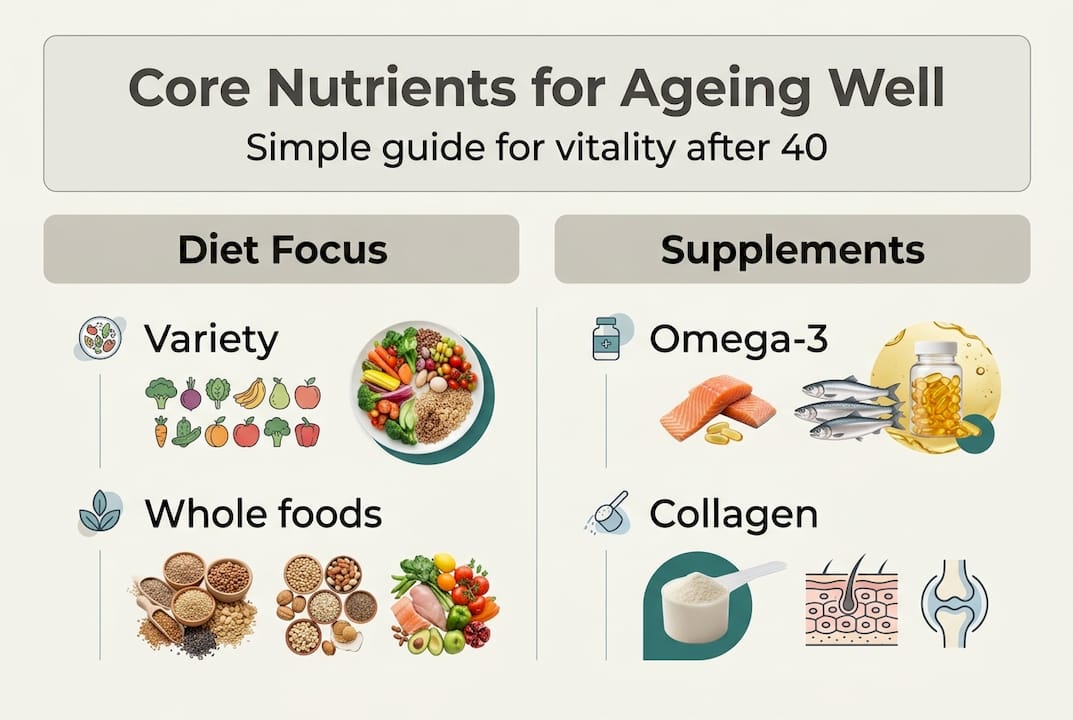
Not all supplements are created equal. The following nutrients have the strongest evidence base for supporting healthy ageing:
- Omega-3 fatty acids: Reduce systemic inflammation, support cardiovascular and cognitive health, and improve longevity biomarkers
- Collagen peptides: Directly support skin elasticity and joint integrity; collagen SMD=1.93 for skin elasticity in clinical trials
- CoQ10 (Coenzyme Q10): Supports mitochondrial energy production, which declines significantly after 40
- Curcumin: Potent anti-inflammatory and antioxidant compound; bioavailability improves with piperine
- Flavanols and polyphenols: Found in berries, dark chocolate, and green tea; support vascular health and reduce oxidative damage
- Vitamin D3 with K2: Critical for bone density, immune regulation, and cardiovascular health
Omega-3s, CoQ10, curcumin, and collagen peptides show evidence for anti-ageing via anti-inflammatory, antioxidant, mitochondrial support, and skin elasticity improvement.
| Supplement | Evidence level | Primary benefit |
|---|---|---|
| Omega-3 fatty acids | Meta-analysis, RCT | Inflammation, cardiovascular, cognition |
| Collagen peptides | RCT | Skin elasticity, joint health |
| CoQ10 | RCT | Mitochondrial energy, heart health |
| Curcumin | Meta-analysis | Anti-inflammatory, antioxidant |
| Vitamin D3 | Meta-analysis, RCT | Bone, immune, cardiovascular |
| Hyaluronic acid | Limited RCT | Skin hydration (food sources preferred) |
For a broader review of what the research supports, see this anti-ageing supplements review. Supplements like hyaluronic acid, lycopene, and carotenoids currently lack strong clinical evidence and are better obtained through food. Learn more about the advantages of supplements and how to use them safely alongside your diet. You can also explore antioxidants for ageing for a focused breakdown of the most protective compounds.
With foundation nutrients and supplements in mind, gut health deserves special attention as a driver of healthy ageing.
Gut health: The secret to reducing ‘inflammaging’
Inflammaging refers to the low-grade, chronic inflammation that accumulates with age and accelerates decline across multiple body systems. Your gut microbiota (the community of bacteria living in your digestive tract) plays a central role in either driving or dampening this process.
As you age, populations of beneficial bacteria such as Akkermansia and Bifidobacterium decline. This weakens the gut barrier, allowing inflammatory compounds to enter the bloodstream. Plant-based diets rich in fibre and polyphenols enhance gut microbiota, supporting barrier integrity and reducing inflammaging.
Foods to boost gut health after 40:
- Fermented foods: Yoghurt, kefir, sauerkraut, and kimchi introduce beneficial bacteria
- Prebiotic fibre: Garlic, onions, leeks, asparagus, and oats feed existing beneficial bacteria
- Polyphenol-rich foods: Blueberries, green tea, extra virgin olive oil, and dark chocolate
- Legumes: Lentils, chickpeas, and black beans provide both fibre and plant protein
- Whole grains: Oats, barley, and rye support microbiota diversity
Pro Tip: Prioritise prebiotic foods before reaching for probiotic supplements. Feeding the bacteria already present in your gut is often more effective than introducing new strains through capsules.
For more on how diet shapes ageing and vitality, our dedicated guide covers the full picture of dietary influence on healthy ageing.
After gut health, it is crucial to personalise strategies, including targeted supplementation, for optimal results after 40.
Personalising your anti-ageing nutrition: Monitoring and supplement strategies
No two people age identically. Genetics, lifestyle, existing health conditions, and dietary history all shape which nutrients you need most. A personalised approach is far more effective than a generic supplement stack.
How to monitor your nutrient and supplement needs:
- Annual blood tests: Request panels for vitamin D, B12, folate, iron, magnesium, and omega-3 index
- Track symptoms: Persistent fatigue, poor wound healing, brittle nails, and brain fog are common signs of deficiency
- Age-specific considerations: Women over 60 benefit from higher calcium and vitamin D; men over 50 should monitor B12 and zinc
- Review medications: Some common medications deplete specific nutrients (statins reduce CoQ10; metformin reduces B12)
- Reassess every 12 months: Needs shift as you age; what worked at 45 may need adjustment at 55
Common edge cases to consider:
- Women over 60 with osteoporosis risk: prioritise calcium, vitamin D3, and K2
- Adults with known vitamin D deficiency: supplementation is strongly indicated
- Those with digestive conditions: absorption of B12, iron, and zinc may be impaired
- Vegans and vegetarians: B12, omega-3 (algae-based), iron, and zinc require close monitoring
Safety note: A food-first approach minimises long-term risks. Use supplements to fill genuine gaps, not to replace dietary quality. Oral supplements are safe short-term, but long-term safety data remains limited for many compounds. Periodic reassessment with a healthcare professional is recommended.
For guidance on selecting supplements that match your specific needs, and a broader practical guide to healthy ageing, Vivetus® provides structured resources to help you make informed decisions. You can also explore a longevity stack of supplements for a research-informed starting point.
Having learned to personalise your strategy, let us review how to avoid common mistakes and troubleshoot for best results.
Troubleshooting common pitfalls and maximising results
Even well-intentioned approaches can fall short. These are the most common mistakes adults over 40 make when pursuing anti-ageing nutrition.
Common mistakes to avoid:
- Overreliance on supplements: Supplements cannot compensate for a poor diet. Whole-food patterns show an odds ratio of up to 1.86 for healthy ageing outcomes, far exceeding isolated supplement use
- Neglecting physical activity: Nutrition and exercise work synergistically. Protein intake, for example, only builds muscle effectively when combined with resistance training
- Low dietary diversity: Eating the same foods repeatedly limits micronutrient variety and reduces microbiota richness
- Ignoring sleep and stress: Both directly impair nutrient absorption and accelerate inflammation
- Chasing trends: Many marketed anti-ageing supplements lack robust clinical evidence; prioritise those with RCT or meta-analysis support
Pro Tip: Build your routine in layers. Start with dietary quality, then add targeted supplements for confirmed gaps, then integrate consistent movement. This sequence produces compounding benefits that no single intervention can match.
For a deeper look at how healthy diet and ageing interact, and what the longevity diet evidence currently supports, these resources provide a strong evidence base for your decisions.
Take your anti-ageing nutrition further with Vivetus®
You now have a clear framework: the right dietary patterns, the most evidence-backed supplements, and a personalised monitoring approach. The next step is putting it into practice with products and guidance you can trust.
Vivetus® brings together scientifically-supported supplements aligned with the strategies covered in this guide. Whether you are looking to address energy decline, support skin health, or reduce inflammation, the Energy & Vitality bundle is designed to complement a whole-food dietary foundation with targeted nutritional support. Orders over €50 qualify for free shipping, making it straightforward to start or expand your supplement routine. By connecting sound nutritional science with expert-led supplement options, Vivetus® helps you pursue healthier ageing with confidence.
Frequently asked questions
Which supplement is most effective for anti-ageing after 40?
Omega-3s, collagen, and polyphenols have the strongest evidence for improving vital signs of ageing, particularly skin elasticity and metabolic health. These three are a reliable starting point for adults over 40.
How can I safely combine diet and supplements for ageing well?
Start with a whole-food pattern such as the Mediterranean or plant-based diet, then use supplements to fill gaps you cannot cover through food. Whole-food diet patterns provide multidimensional benefits, with supplements serving a supporting role.
Are there anti-ageing supplements that do not work?
Yes. Hyaluronic acid, lycopene, and carotenoids lack significant clinical evidence as supplements and are better consumed through food sources such as tomatoes, leafy greens, and colourful vegetables.
How often should micronutrient levels be checked after 40?
Annual testing is recommended, or sooner if you notice symptoms such as persistent fatigue or poor skin health. Monitoring deficiencies for key micronutrients becomes increasingly important after 40.
Does gut health really impact ageing?
Yes. Fibre and polyphenol intake directly shapes gut microbiota composition, reducing chronic inflammation and slowing age-related decline across multiple body systems.