

Essential guide to safe, effective dietary supplement use
TL;DR:
- Focus on evidence-backed nutrients like multivitamins, vitamin D, B12, and omega-3 for healthy ageing.
- Use supplements responsibly by following dosage guidelines and consulting healthcare professionals.
- Regularly review and track your supplement routine to ensure safety and effectiveness.
The supplement aisle can feel overwhelming. Dozens of products, conflicting advice, and bold marketing claims make it genuinely difficult to know what your body actually needs. Many adults aged 30 to 65 either take too many supplements without clear reason, or avoid them entirely out of caution. Neither approach serves your health well. The good news is that a focused, evidence-backed strategy can meaningfully support healthy ageing and vitality. This guide cuts through the noise, covering which supplements matter most, how to use them safely, and how to track whether they are actually working for you.
Table of Contents
- Core supplements for healthy ageing: what and why
- Safety first: using supplements responsibly
- How to take supplements for best results
- Checking your progress and troubleshooting common issues
- Why targeted, minimal supplement use wins over ‘more is better’
- Next steps: expert guidance for your supplement choices
- Frequently asked questions
Key Takeaways
| Point | Details |
|---|---|
| Evidence first | Focus on supplements with proven benefits like multivitamins, vitamin D, B12, and omega-3s for healthy ageing. |
| Safety over quantity | Always check recommended doses, choose trusted brands, and consult professionals before starting new supplements. |
| Routine matters | Take supplements at the right time with food when needed, and build them into daily habits for best results. |
| Monitor and adjust | Track your progress, watch for warning signs, and get regular bloodwork to ensure safety and effectiveness. |
Core supplements for healthy ageing: what and why
Not every supplement on the shelf earns its place in your routine. For adults focused on healthy ageing, a handful of nutrients stand out based on consistent clinical evidence.
Daily multivitamins are a practical starting point. Research from the COSMOS trial found that a daily multivitamin supports cognition and may slow epigenetic ageing in older adults. This does not mean multivitamins are magic, but they provide a reliable nutritional safety net, particularly when diet is inconsistent.
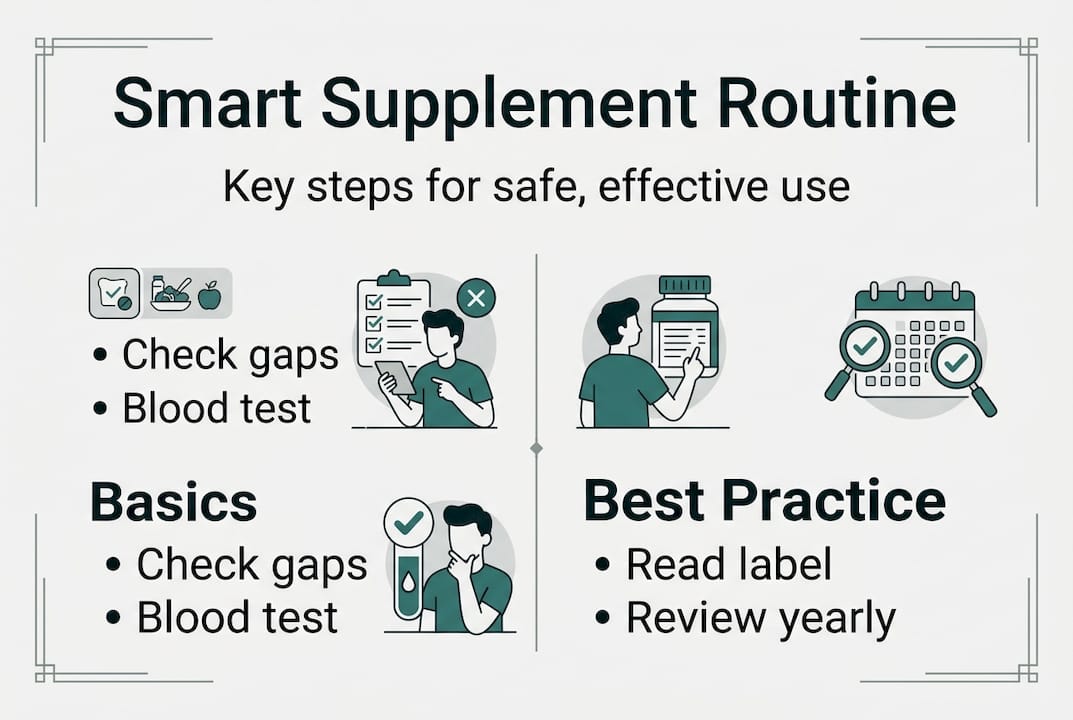
Vitamin D is arguably the most widely needed supplement in the UK and northern Europe. The recommended intake for bone and immune health is 600 IU per day for adults under 70, and 800 IU for those above. Many people, especially those who spend little time outdoors, fall short of this through diet alone. Vitamin D supports bone density, muscle function, and immune response, making it particularly relevant as you age.
Vitamin B12 becomes critical after age 50. Absorption from food declines with age due to reduced stomach acid, meaning even a good diet may not deliver enough. Nerve health, red blood cell production, and cognitive function all depend on adequate B12 levels.
Omega-3 fatty acids offer well-documented cardiovascular benefits. If your weekly fish intake is low, an omega-3 supplement can help bridge that gap. Look at vitamins for ageing adults for a fuller breakdown of priorities after 50.
Other nutrients worth considering include magnesium (for sleep and muscle function) and calcium (for bone support, particularly in post-menopausal women). These are not universally needed but may be relevant depending on your diet and health history.
| Supplement | Primary benefit | Who may need it most |
|---|---|---|
| Multivitamin | Cognitive and general health | Adults with inconsistent diets |
| Vitamin D | Bone, immune, and muscle health | Low sun exposure, over 50 |
| Vitamin B12 | Nerve and cognitive function | Adults over 50, vegetarians |
| Omega-3 | Cardiovascular support | Low fish intake |
| Magnesium | Sleep and muscle function | Those with high stress or poor diet |
- Focus on nutrients where your diet is genuinely lacking
- Prioritise supplements with clinical trial support
- Avoid duplicating nutrients across multiple products
- Review your choices annually as needs change with age
Pro Tip: Before buying anything, consider which specific gaps exist in your current diet. Targeted supplementation based on real need is far more effective than a broad, unfocused approach. Explore evidence-backed supplements for ageing to align your choices with current research.
Safety first: using supplements responsibly
Supplements are not regulated in the same way as prescription medicines. In many countries, including the UK and USA, manufacturers do not need to prove safety or effectiveness before products reach shelves. This makes informed purchasing essential.
The FDA does not pre-approve dietary supplements before they go to market. Manufacturers are responsible for ensuring product safety, but independent verification is not guaranteed. Always choose products with third-party quality certification.
The RDA (Recommended Dietary Allowance) represents the amount most people need daily. The UL (Upper Tolerable Intake Level) is the maximum safe dose. Staying between these figures is the goal. USP-verified products and doctor consultation are strongly recommended before starting any new supplement, particularly if you take prescription medication.

Over-supplementation is a real risk. Vitamin D toxicity, for example, can cause nausea, confusion, and kidney damage. Excess vitamin D and omega-3s carry toxicity risks at high doses, and omega-3s in large amounts may affect blood clotting. These are not theoretical dangers; they occur when people assume more is always better.
| Safe habits | Unsafe habits |
|---|---|
| Stick to RDA or clinically supported doses | Taking high doses without medical guidance |
| Choose USP-verified or third-party tested products | Buying unverified products based on marketing |
| Inform your GP of all supplements you take | Combining supplements and medications without advice |
| Review your supplement list annually | Continuing supplements indefinitely without reassessment |
- Check for USP, NSF, or Informed Sport certification on labels
- Tell your GP and pharmacist about every supplement you use
- Do not exceed the stated upper intake limit for any nutrient
- Watch for new symptoms after starting a supplement
For a structured overview of best practices, the supplement safety guidelines on the Vivetus blog offer clear, practical direction. You can also review supplement safety steps to build a responsible routine from the ground up.
How to take supplements for best results
Timing and method matter more than many people realise. Taking the right supplement at the wrong time, or without food when food is needed, can significantly reduce its effectiveness.
Here is a practical daily framework:
- Take fat-soluble vitamins with a meal. Vitamins A, D, E, and K require dietary fat for absorption. A meal containing some healthy fat, such as eggs, avocado, or olive oil, improves uptake considerably. Fat-soluble vitamins with meals and splitting calcium doses for better absorption are both evidence-supported practices.
- Split calcium doses. The body absorbs calcium best in amounts of 500 mg or less at a time. If you take 1,000 mg daily, split it across two meals rather than taking it all at once.
- Take magnesium in the evening. Many people find magnesium supports sleep quality. Taking it 30 to 60 minutes before bed is a common and practical approach.
- Take B12 in the morning. B vitamins can be energising. Morning is generally the better time to avoid any impact on sleep.
- Keep supplements visible. Storing them near your breakfast or on your kitchen counter reduces the chance of forgetting a dose.
- Use a weekly pill organiser. This removes the daily decision-making and makes it easy to see whether you have taken your supplements.
- Record your routine. A simple note on your phone or a paper log helps you track consistency and notice patterns.
Pro Tip: Before starting vitamin D or B12 supplements, ask your GP for a blood test. Knowing your baseline levels means you can dose appropriately and measure real progress. Find further supplementation tips for ageing and cognitive health supplement tips on the Vivetus blog.
Checking your progress and troubleshooting common issues
Starting a supplement routine is one thing. Knowing whether it is working is another. Many people continue taking supplements for months without any clear sense of benefit or harm.
Signs that supplements are working tend to be gradual. Improved energy, better sleep, fewer infections, and stable mood are all reasonable indicators, though they are not always easy to attribute to a single supplement. Blood tests are the most reliable measure. Vitamin D and B12 levels can be checked before and after supplementation to confirm improvement. Blood tests for vitamin D or B12 status are particularly useful for avoiding both deficiency and excess.
Typical timelines vary by nutrient:
- Vitamin D: 8 to 12 weeks to see meaningful change in blood levels
- B12: 4 to 8 weeks for noticeable improvement in energy or nerve symptoms
- Omega-3: 6 to 12 weeks for cardiovascular markers to shift
- Magnesium: 2 to 4 weeks for sleep or muscle improvements
Warning signs to watch for:
- Nausea, headaches, or stomach upset shortly after starting a new supplement
- Unusual fatigue or mood changes
- Skin reactions or increased bruising
- Digestive issues such as constipation or diarrhoea
Deficiency is more common than many people expect. Vitamin D insufficiency affects a significant proportion of adults over 50 in northern Europe, and B12 deficiency is frequently underdiagnosed in older adults due to gradual symptom onset. If you suspect a deficiency or notice persistent symptoms, consult your GP promptly. For structured guidance on managing your routine safely, the step-by-step safety guidance resource is a useful reference.
Why targeted, minimal supplement use wins over ‘more is better’
There is a persistent idea in wellness culture that taking more supplements means better health outcomes. The evidence does not support this. Routine high-dose supplements lack strong evidence of benefit in people without identified deficiencies, and some carry genuine risks at elevated doses.
The most effective approach is targeted. Identify where your diet falls short, confirm with blood tests where possible, and supplement specifically for those gaps. A person eating oily fish twice a week and spending time outdoors has very different needs from someone who is housebound and eats a restricted diet.
Diet remains the foundation. Whole foods deliver nutrients in combinations and ratios that supplements cannot fully replicate. Supplements work best as a top-up, not a replacement. The adults who benefit most from supplementation are those with clear, identified needs, not those taking a broad stack of products on the assumption that more is better.
Pro Tip: Review your supplement use annually with your GP. Your needs change as you age, and what was appropriate at 45 may not be right at 60. See evidence-backed choices for healthy ageing for guidance grounded in current research.
Next steps: expert guidance for your supplement choices
Navigating supplement decisions is easier with reliable resources and professional input. At Vivetus, you will find a curated range of evidence-based supplements designed specifically for healthy ageing and vitality, with clear product information to support informed choices.
The Vivetus blog offers practical, research-backed guides covering everything from foundational nutrients to more specific health goals. For a thorough overview of how to build and maintain an effective supplement routine, the full healthy ageing guide is an excellent starting point. As always, consulting a healthcare professional before making significant changes to your supplement routine ensures your choices are safe, appropriate, and aligned with your individual health profile.
Frequently asked questions
How do I know which dietary supplements I actually need?
Get blood tests for vitamin D and B12 to establish your baseline, then focus on supplements that address your specific age, dietary gaps, and health concerns. Testing before supplementing helps you avoid both deficiency and unnecessary excess.
Is it safe to take a daily multivitamin long term?
Yes, for most adults a daily multivitamin is safe and may support healthy ageing when taken within recommended doses. The COSMOS trial found multivitamins support cognition and are safe in older adults.
What are signs of supplement overdose or toxicity?
Symptoms can include nausea, confusion, irregular heartbeat, and muscle weakness. Excess vitamin D is a common cause of toxicity in adults who self-supplement without guidance; seek medical help promptly if you suspect overdose.
Can I get all my nutrients from food instead of supplements?
A healthy, varied diet should be your primary source of nutrients, but adults over 50 often need B12 or D supplements due to reduced absorption and limited sun exposure. Diet first, supplement when necessary is the evidence-supported approach.