
Nutritional supplements guide for healthy ageing 2026
TL;DR:
- Focus on nutrients with strong evidence like vitamin D, B12, calcium, and magnesium for healthy aging.
- Assess individual needs through diet quality and blood tests before starting targeted supplements.
- Expect modest benefits such as improved energy, bone health, and physical strength with proper supplementation.
Staying vibrant after 30 is a clear priority for many adults, yet the supplement aisle can feel overwhelming. Thousands of products compete for attention, each carrying bold promises and little clarity. The challenge is not motivation but direction: knowing which nutrients genuinely support healthy ageing, which are unnecessary, and how to avoid wasting money or, worse, causing harm. This guide cuts through the noise with evidence-based recommendations drawn from current research, giving you a structured, practical roadmap for safe and effective supplementation at every stage of adult life.
Table of Contents
- Assessing your supplement needs: How to start safely
- Choosing core supplements for healthy ageing
- Addressing special cases and common deficiencies
- Maximising results: Protein, multinutrients, and realistic outcomes
- Why most supplement guides still miss the mark
- Take the next step to tailored supplementation
- Frequently asked questions
Key Takeaways
| Point | Details |
|---|---|
| Diet first, supplements fill gaps | A balanced diet is your foundation; supplements become essential when real deficiencies or risks are identified. |
| Focus on core nutrients | Vitamin D, B12, calcium, and magnesium have the most evidence for healthy ageing—match dosage to age and dietary needs. |
| Personalisation is key | Individual needs vary—age, diet, health status and medications mean your supplement plan should be tailored and regularly reviewed. |
| Measure and adapt | Check blood markers and track physical or cognitive improvements to know if your supplement routine is effective. |
Assessing your supplement needs: How to start safely
Before choosing a supplement, you need to assess your real needs. Many adults reach for products based on advertising rather than genuine deficiency, which leads to unnecessary spending and potential side effects. The starting point is always diet quality. Prioritise food sources for nutrients; supplements fill gaps only when diet is inadequate or deficiencies exist.
Certain situations do increase the likelihood of genuine nutritional gaps. These include following a vegan or vegetarian diet, limited sun exposure, being postmenopausal, living with a chronic condition, or taking long-term medications that deplete specific nutrients. In these cases, targeted supplementation is not optional but practical.
The table below outlines common signs of possible deficiency alongside situations that warrant supplementation:
| Possible deficiency sign | When supplementation is worth considering |
|---|---|
| Persistent fatigue | Vegan or plant-based diet |
| Brittle nails or hair loss | Limited sun exposure year-round |
| Muscle cramps or weakness | Postmenopausal or over age 50 |
| Poor wound healing | Long-term medication use |
| Low mood or brain fog | Diagnosed deficiency via blood test |
Key situations where supplements are commonly needed:
- Vegan diet (B12, iron, zinc, omega-3)
- Low sun exposure (vitamin D)
- Postmenopausal women (calcium, vitamin D)
- Corticosteroid or metformin users (B12, calcium)
- Adults over 65 with reduced appetite
For choosing supplements for healthy ageing, a consultation with a GP or registered dietitian is the most reliable first step. Blood tests for vitamin D, B12, iron, and ferritin are widely available and remove guesswork entirely.
Pro Tip: Avoid starting high-dose supplements without confirmed need. Test your levels first where possible, particularly for vitamin D and B12, as excess intake carries its own risks.
Choosing core supplements for healthy ageing
Once you have mapped your needs, focus on the nutrients with the strongest evidence for supporting healthy ageing. Four stand out consistently across research: vitamin D, vitamin B12, calcium, and magnesium.
Vitamin D supplementation is recommended for healthy ageing, especially over age 50, as skin synthesis declines significantly with age. Vitamin B12 absorption declines with age due to reduced stomach acid, making supplementation important for brain and immune health. Calcium supplements may be needed for bone health but should not exceed recommended limits. Magnesium supports heart, muscle, nerve, and bone health, with glycinate being the preferred form for absorption.
| Nutrient | Typical dietary intake | Recommended supplemental amount (50+) | Best form |
|---|---|---|---|
| Vitamin D | 100-200 IU/day | 1,000-2,000 IU/day | D3 (cholecalciferol) |
| Vitamin B12 | 3-5 mcg/day | 100-400 mcg/day | Methylcobalamin |
| Calcium | 700-900 mg/day | 500-600 mg/day supplement | Calcium citrate |
| Magnesium | 200-250 mg/day | 200-350 mg/day | Magnesium glycinate |
For evidence-backed supplements for ageing, the form of each nutrient matters as much as the dose. Calcium citrate absorbs without food; calcium carbonate requires stomach acid. D3 raises blood levels more effectively than D2. These distinctions affect real-world outcomes.
Steps to pick the right supplement brand:
- Check for third-party testing certification (e.g. NSF, USP, or Informed Sport)
- Verify the dose matches your assessed need, not just the daily reference value
- Confirm the nutrient form matches the most bioavailable option
- Review the ingredient list for unnecessary fillers or allergens
- Choose brands that publish batch testing results openly
Pro Tip: When taking calcium, track your total daily intake from food and supplements combined. For adults over 50, staying below 1,200 mg per day total reduces the risk of kidney stones and cardiovascular concerns. Also consider multivitamin benefits as a broad baseline before adding individual nutrients.
Addressing special cases and common deficiencies
Not everyone shares the same requirements. Your age, lifestyle, and health status make a significant difference to which supplements are relevant.
Postmenopausal women face accelerated bone density loss and need reliable calcium and vitamin D intake. Vegans are at high risk for B12, iron, zinc, and omega-3 deficiency, since these nutrients are concentrated in animal products. Adults on corticosteroids or metformin often develop B12 and calcium depletion over time. These are not edge cases but common realities for millions of adults.
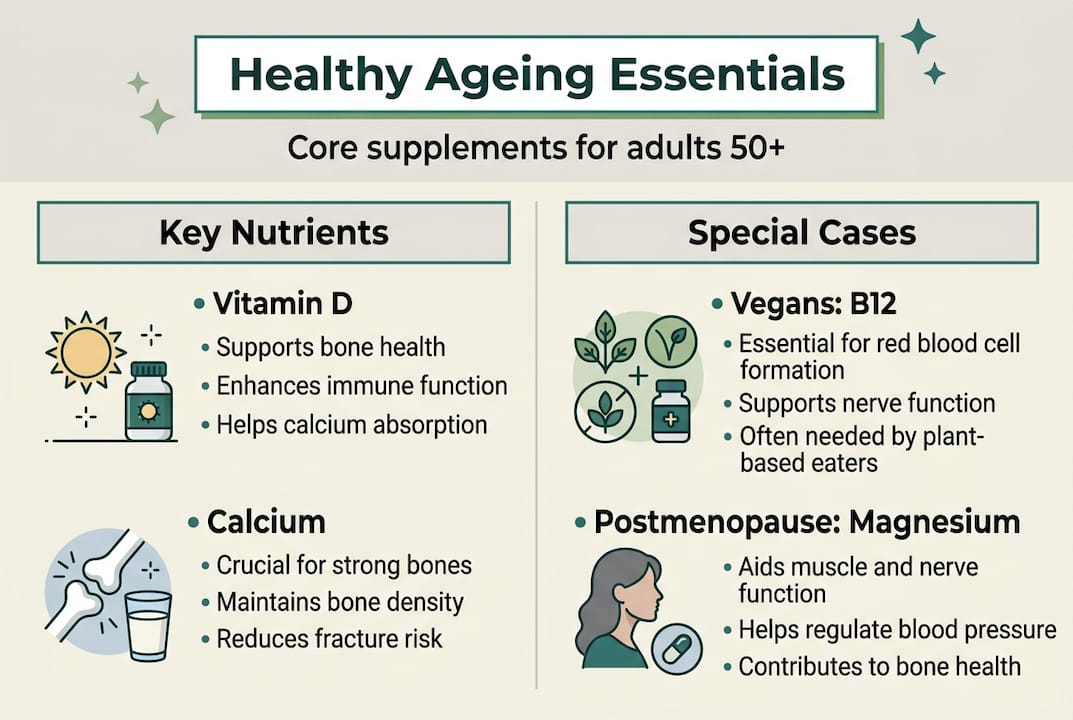
Targeted supplementation for postmenopausal women, vegans, and corticosteroid users should be based on tested levels before starting high-dose regimens.
Key nutrients commonly underconsumed and their deficiency symptoms:
- Vitamin B12: Fatigue, numbness, poor memory
- Vitamin D: Bone pain, low mood, frequent illness
- Calcium: Muscle cramps, weak nails, dental problems
- Magnesium: Insomnia, anxiety, muscle twitching
- Zinc: Slow wound healing, hair thinning, impaired taste
- Iron: Breathlessness, pallor, persistent tiredness
Research confirms that B6, B12, C, D, calcium, magnesium, potassium, and zinc are among the most underconsumed nutrients in adults over 50. A broad-spectrum multivitamin can address multiple gaps simultaneously, with specific supplements added on top where individual needs are confirmed.
Safety note: Over-supplementation is a genuine risk. Fat-soluble vitamins such as A, D, E, and K accumulate in the body and can reach toxic levels. Always confirm deficiency before starting high-dose protocols, and review your full supplement stack with a healthcare professional at least once per year.
For a broader view of the advantages of nutritional supplements, including how they interact with lifestyle factors, it is worth reviewing the current evidence before committing to a long-term routine.
Pro Tip: Start with an age-specific multivitamin formulated for your decade of life. These are designed to reflect the nutrient priorities most relevant to your age group, then add targeted single-nutrient supplements only where a confirmed gap exists.
Maximising results: Protein, multinutrients, and realistic outcomes
Having chosen and started your supplements, here is what the science says you can and cannot expect.
Daily multivitamin use in middle-aged and older adults may provide small cognitive and memory benefits, serving as insurance against dietary gaps. This is useful but modest. Do not expect dramatic transformation from a multivitamin alone.
Protein and energy supplementation in undernourished elderly adults may reduce mortality and improve physical strength. One key statistic: protein and energy supplements produce a 2.2% weight gain in at-risk elderly adults, alongside a relative risk of 0.79 for mortality reduction. These are meaningful numbers for frail adults. Nutritional supplements improve handgrip strength and gait speed in sarcopenia patients, which are reliable markers of functional independence.

| Supplement type | Evidence for cognition | Evidence for physical function |
|---|---|---|
| Multivitamin | Small memory benefit | Modest energy support |
| Protein supplement | Limited | Strong in undernourished adults |
| Antioxidants (food) | Supportive | Supportive |
| Antioxidants (pills) | Weak | Weak to neutral |
Realistic benefits you can expect with consistent, appropriate supplementation:
- Improved energy and reduced fatigue within 4 to 8 weeks of correcting a deficiency
- Better bone density markers over 12 to 24 months with vitamin D and calcium
- Improved handgrip strength and gait speed with protein supplementation in sarcopenia
- Small but measurable memory improvements with daily multivitamin use
- Reduced illness frequency with corrected vitamin D and zinc levels
Antioxidants from food support health better than supplements. High-dose antioxidant pills lack strong proof for disease prevention and may interfere with certain medications. Prioritise colourful vegetables, berries, and nuts over antioxidant capsules.
For practical guidance on selecting nutritional products that align with your health goals, reviewing independent research summaries helps you separate genuine benefit from marketing claims.
Why most supplement guides still miss the mark
Most supplement guides hand you a generic list and call it advice. The problem is that a list of popular nutrients tells you nothing about whether you personally need them, in what dose, or for how long. Generic recommendations treat all adults over 50 as identical, which they are not.
The most effective approach starts with diet quality, not a shopping list. Once you have an honest picture of what your diet consistently lacks, you can personalise supplementation using blood test results or professional consultation. This is not complicated, but it does require one step most guides skip: honest self-assessment.
Science also evolves. What was considered standard advice five years ago may now be revised. Staying current matters, particularly as marketing trends push high-dose antioxidants, collagen powders, and nootropic blends with limited evidence. Scepticism is a tool, not an obstacle.
For practical supplement safety tips that help you avoid common mistakes, reviewing current guidance before making changes to your routine is always worthwhile. The goal is not to take more supplements but to take the right ones.
Take the next step to tailored supplementation
Now that you are equipped with credible knowledge, here is where to find deeper support and reliable products.
Vivetus offers a curated range of research-backed supplements designed specifically for healthy ageing and overall vitality. Every product on the platform is selected with quality and evidence in mind, giving you confidence in what you are putting into your body.
For further reading on making informed choices, the expert supplement guidance available on the Vivetus blog covers product selection, dosage principles, and the latest science in accessible detail. Free shipping is available on orders over €50, making it straightforward to start or refine your supplement routine without unnecessary cost.
Frequently asked questions
Which supplements are most important for adults over 50?
For adults over 50, vitamin D and B12 alongside calcium and magnesium are most often recommended to support bone, immune, and brain health. These four nutrients address the most common age-related gaps identified in current research.
Can taking multivitamins prevent memory loss?
Daily multivitamin use may offer small benefits for memory in middle-aged and older adults, but does not prevent dementia or major cognitive decline. It serves as nutritional insurance rather than a treatment.
Are protein supplements helpful for healthy ageing?
Protein supplementation can support physical strength and function, particularly for frail or undernourished adults. Benefits are most pronounced when combined with resistance exercise and adequate overall calorie intake.
Is it safe to take antioxidant supplements for ageing prevention?
It is best to obtain antioxidants from food, as antioxidant supplements lack strong evidence for preventing ageing-related diseases. High-dose pills may even interfere with certain medications or produce adverse effects.
How can I measure if my supplementation is working?
Improvements in energy levels, physical strength, and follow-up blood test results are the most reliable indicators of effective supplementation. Tracking these over a 3 to 6 month period gives a clear picture of progress.