

Sleep and longevity: what health-conscious adults need to know
TL;DR:
- Seven hours of high-quality sleep linked to the lowest risk of mortality in large studies. Regular sleep timing and preservation of deep sleep are equally important for healthy aging.
Around seven hours of regular, high-quality sleep is associated with the lowest all-cause mortality risk in large prospective cohorts. Both short sleep and long sleep are independently linked to higher mortality after adjusting for common confounders. The relationship between sleep and longevity is not simply about duration: regularity of timing and the preservation of slow-wave sleep (SWS) are equally important, and often overlooked.
Three control levers determine how sleep affects lifespan:
- Duration: approximately seven hours per night sits at the nadir of the U-shaped mortality curve; risk rises at both extremes.
- Regularity: consistent sleep and wake times are an independent predictor of lower mortality, separate from how long you sleep.
- Sleep architecture: preserving SWS (deep, slow-wave sleep) and minimising fragmentation protects cognitive function, metabolic health, and immune resilience as you age.
Statistic to note: A meta-analysis of 40 prospective cohort studies found the lowest all-cause mortality risk near seven hours of sleep per day, with risk rising progressively at shorter and longer durations.
Table of Contents
- What the research says about sleep duration, regularity, and mortality risk
- How sleep architecture and circadian regularity drive biological ageing
- How much sleep should you aim for? Recommended durations by age
- Sleep problems that raise mortality risk: what to watch for
- Evidence-backed steps to protect sleep for healthy ageing
- Sex and age differences in sleep and mortality risk
- What the evidence says about supplements and sleep
- Key takeaways
- A note on evidence and editorial approach
- Vivetus supplements as a practical adjunct to sleep strategies
- Useful sources and further reading
What the research says about sleep duration, regularity, and mortality risk
The evidence base for the relationship between sleep and longevity is substantial. A systematic review and meta-analysis pooling 27 independent cohort samples and nearly 1.4 million participants confirmed that both short and long habitual sleep durations are associated with higher all-cause mortality. The U-shaped curve is consistent across populations, age groups, and continents, though effect sizes vary.
Short sleep and long sleep carry elevated relative risk compared with the seven-hour reference point. Long sleep, in particular, is often misread as protective. The data suggest the opposite: habitual long sleep may partly reflect underlying illness or depression rather than cause harm directly, which is why reverse causation remains a key confounder in this literature.
“Irregular sleep and non-optimal sleep duration separately have been shown to be associated with increased disease and mortality risk.” — Multi-Ethnic Study of Atherosclerosis sleep cohort, PMC
Self-report studies dominate the literature, and they have a known limitation: people tend to round their sleep estimates, compressing the extremes. Actigraphy and polysomnography studies are more precise. Crucially, actigraphy-based cohort analyses identify sleep regularity as a strong, independent predictor of lower mortality, with higher regularity associated with 20%–48% lower all-cause mortality in referenced cohort work. That finding does not emerge from self-report data alone, because questionnaires cannot capture night-to-night timing variability reliably.
Scoping reviews note that longitudinal data combining objective sleep measures with ageing outcomes remain limited, and causality is difficult to establish. The current evidence supports strong associations, not definitive causal chains. That distinction matters for how you interpret individual risk, though the practical direction of the advice is consistent: aim for seven hours, keep timing stable, and treat fragmentation as a warning sign.
How sleep architecture and circadian regularity drive biological ageing
Duration is the most visible metric, but the internal structure of sleep may be the more consequential variable for healthy ageing.
Slow-wave sleep and the brain’s overnight maintenance
SWS, also called N3 or deep sleep, is the stage during which the glymphatic system clears metabolic waste from the brain, including proteins associated with neurodegeneration. Growth hormone secretion is also concentrated in SWS, supporting tissue repair and metabolic regulation. Research published in Frontiers in Sleep (2024) links reduced SWS to amyloid burden and impaired overnight memory consolidation, suggesting a mechanistic pathway from poor sleep architecture to cognitive decline.
Frontal slow-wave activity correlates directly with overnight memory consolidation. As SWS declines with age, so does the efficiency of this consolidation process. A PMC review on sleep and human ageing documents that older adults show reduced SWS amplitude and continuity alongside increased fragmentation, with frontal atrophy appearing as a structural correlate. This is not simply a consequence of ageing; it is partly a driver of it.
A small but striking polysomnography study of oldest-old individuals found that very long-lived people tend to show preserved N3 percentage and strict sleep-wake regularity compared with younger elderly groups, alongside a favourable lipid profile. Regularity and SWS preservation appear to be longevity markers, not merely correlates of good health.
Circadian regularity and metabolic synchrony
The circadian system coordinates hormone release, immune activity, glucose metabolism, and cardiovascular function across a 24-hour cycle. When sleep timing is irregular, this synchrony breaks down. Shift workers and people with chronically variable sleep schedules show elevated cardiometabolic risk, partly because misaligned sleep disrupts cortisol and insulin rhythms independently of total sleep duration.
Consistent sleep and wake times reinforce the master clock in the suprachiasmatic nucleus, keeping peripheral clocks in organs aligned. The practical implication: going to bed and waking at the same time every day, including weekends, is not a lifestyle preference. It is a physiological requirement for metabolic and immune health over the long term.
How much sleep should you aim for? Recommended durations by age
The seven-hour nadir applies primarily to adults aged roughly 18–64. Acceptable ranges vary by life stage, and older adults face additional complexity because age-related changes in sleep architecture can make the same biological need harder to satisfy.
| Age group | Suggested nightly sleep range | Realistic targets and notes |
|---|---|---|
| Young adults (18–) — | 7–9 hours | Prioritise consistent timing; SWS is highest in this group |
| Middle age (–64) — | 7–8 hours | Watch for emerging fragmentation; regularity becomes more important |
| Older adults (65+) — | 7–8 hours (biological need unchanged) | SWS declines naturally; short naps (under 30 min) may help efficiency without disrupting night sleep |
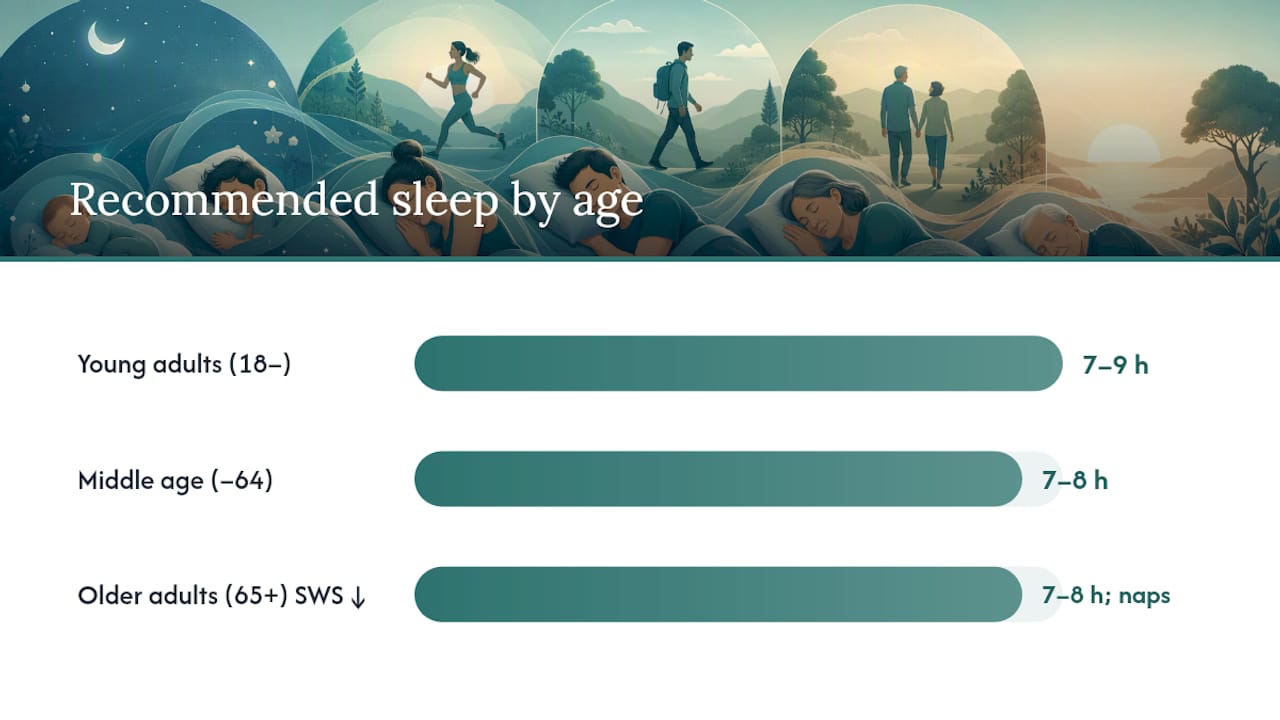
Age-related increases in fragmentation and decreased homeostatic rebound mean older adults can appear to need less sleep while actually experiencing impaired recovery. The biological requirement does not shrink; the ability to achieve consolidated sleep does. Excessive daytime napping in older adults is associated with lower odds of successful ageing in some studies, though short restorative naps appear neutral or mildly beneficial for sleep efficiency.
Measuring sleep reliably
A single night’s reading tells you very little. Tracking over seven to fourteen consecutive nights gives a meaningful picture of your typical total sleep time (TST), sleep efficiency (the proportion of time in bed actually spent asleep), and timing variability. Consumer actigraphy devices and phone-based trackers are not clinical-grade, but they are adequate for identifying patterns and flagging irregularity.
Focus on two metrics beyond raw duration: your sleep midpoint (the midpoint between sleep onset and wake time) and the standard deviation of your sleep onset time across the tracking period. A midpoint that shifts by more than an hour between weekdays and weekends signals social jet lag. A standard deviation above 60 minutes in sleep onset time suggests regularity is the primary target, not duration.
Pro Tip: Track for at least two weeks before changing anything. Baseline data prevents you from optimising the wrong variable.
Sleep problems that raise mortality risk: what to watch for
Not all poor sleep is the same. Several specific conditions carry independent mortality risk and warrant clinical assessment rather than self-management.
Obstructive sleep apnoea
Obstructive sleep apnoea (OSA) causes repeated partial or complete airway collapse during sleep, producing oxygen desaturation and arousal. The apnoea-hypopnoea index (AHI) quantifies severity: an AHI above 15 events per hour is classified as moderate OSA, above 30 as severe. Recurrent desaturation drives oxidative stress, sympathetic nervous system activation, and systemic inflammation, all of which raise cardiovascular and all-cause mortality risk. OSA is substantially underdiagnosed, particularly in women, where symptoms often present differently (fatigue and insomnia rather than loud snoring).
Chronic insomnia and fragmentation
Severe chronic insomnia, defined as difficulty initiating or maintaining sleep at least three nights per week for three months or more, is associated with higher mortality risk in prospective data, particularly when combined with short objective sleep duration. Marked fragmentation, where sleep is repeatedly interrupted without a diagnosable cause, carries similar implications. Excessive daytime sleepiness that persists despite adequate time in bed is a red flag for both OSA and fragmentation-driven sleep debt.
Shift work and circadian misalignment
Shift work is an independent risk factor for cardiometabolic disease and premature mortality, partly through chronic circadian misalignment. Practical mitigation includes anchoring the longest sleep block to the same time of day wherever possible, using blackout curtains and light therapy to reinforce circadian cues, and discussing schedule options with an occupational health clinician.
When to seek specialist assessment:
- Loud snoring with witnessed breathing pauses during sleep
- Unrefreshing sleep combined with significant daytime dysfunction
- Sudden sustained change in sleep duration or quality without obvious cause
- Excessive daytime sleepiness despite seven or more hours in bed
The standard pathway in Central Europe is GP referral to a sleep clinic for polysomnography or home sleep apnoea testing. Do not delay assessment if multiple red flags are present simultaneously.
Pro Tip: If a partner reports that you stop breathing during sleep, treat that as a clinical referral indication, not a lifestyle observation.
Evidence-backed steps to protect sleep for healthy ageing
The following steps are ordered by evidence strength and practical impact. Start with circadian stabilisation before addressing any other variable.
-
Fix your sleep and wake times. Choose a wake time you can maintain every day, including weekends, and work backwards to set a target bedtime. This single intervention improves regularity faster than any other behavioural change.
-
Get morning light exposure. Natural light within 30–60 minutes of waking anchors the circadian clock. On overcast Central European mornings, a 10,000-lux light therapy lamp used for 20–30 minutes achieves a comparable effect.
-
Time exercise appropriately. Moderate aerobic exercise improves SWS and sleep efficiency. Morning or early afternoon timing is preferable; vigorous exercise within two hours of bedtime can delay sleep onset in some people.
-
Reduce evening light exposure. Blue-spectrum light from screens suppresses melatonin secretion. Dimming overhead lights and using warm-spectrum lighting after 20:00 supports natural melatonin rise.
-
Limit late alcohol. Alcohol reduces sleep latency but suppresses SWS and increases second-half fragmentation. Even moderate consumption within three hours of bedtime measurably degrades sleep architecture.
-
Apply CBT-I for persistent insomnia. Cognitive behavioural therapy for insomnia (CBT-I) is the first-line clinical treatment for chronic insomnia, with effects that outlast pharmacological options. Digital CBT-I programmes (such as Sleepio) are accessible without a specialist referral in many Central European countries.
-
Investigate and treat OSA. Positive airway pressure (PAP) therapy, the standard treatment for moderate-to-severe OSA, reduces cardiovascular risk and improves sleep architecture. If you have comorbid insomnia and OSA, combining CBT-I with PAP therapy produces better outcomes than either alone.
-
Manage metabolic and dietary timing. A consistent eating window, with the last meal at least two to three hours before bed, supports circadian alignment and reduces nocturnal metabolic load. This is particularly relevant for adults over 40, where metabolic flexibility declines.
-
Address comorbidities through primary care. Conditions including depression, anxiety, chronic pain, and type 2 diabetes all disrupt sleep architecture. Treating the underlying condition often improves sleep more than any sleep-specific intervention.
Pro Tip: For comorbid insomnia and OSA, start PAP therapy and CBT-I concurrently rather than sequentially. Sequential treatment prolongs the period of impaired sleep architecture and delays the cardiovascular benefit of PAP.
For a broader view of lifestyle habits that support longevity, including diet timing and exercise protocols, Vivetus has published a practical guide covering the full range of modifiable factors.
Sex and age differences in sleep and mortality risk
The relationship between sleep and lifespan is not uniform across sexes or age groups. Research published in 2025 confirms that men and women can show different magnitudes and patterns of risk from extreme sleep durations, and that personalised approaches are warranted rather than a single universal threshold.
Women tend to report more insomnia symptoms and are more likely to have OSA misdiagnosed or undiagnosed because their presentation differs from the classic male pattern. Men show higher rates of severe OSA and may have a steeper cardiovascular risk gradient from untreated apnoea. These differences have clinical implications: screening tools and referral thresholds calibrated on predominantly male cohorts may underperform in women.
Age compounds these differences. Menopause is associated with increased sleep fragmentation, reduced SWS, and a higher incidence of OSA, driven partly by changes in upper airway muscle tone and partly by hormonal shifts affecting thermoregulation. Older men experience progressive SWS decline and increased fragmentation from the fourth decade onwards. Both groups benefit from the same core interventions (circadian stabilisation, SWS protection, OSA treatment), but the clinical entry point and the specific triggers differ.
For adults over 40, the lifestyle changes that support vitality and longevity extend well beyond sleep, but sleep remains the foundation on which other interventions depend. Improving sleep quality in midlife, before significant SWS loss has accumulated, yields the greatest long-term return.
What the evidence says about supplements and sleep
Supplements are not a substitute for behavioural and clinical interventions, but some have a reasonable evidence base for specific sleep outcomes. The table below summarises the most commonly used options relevant to Central European adults.
| Supplement | Primary evidence target | Evidence level | Key safety notes |
|---|---|---|---|
| Melatonin | Sleep onset latency; circadian entrainment (jet lag, shift work) | Moderate (RCTs) | Generally well tolerated at low doses; availability without prescription varies by country in Central Europe |
| Magnesium glycinate | Sleep quality and subjective sleep efficiency | Low-to-moderate (mixed RCTs) | Well tolerated at standard doses; check for interactions with certain medications |
| Valerian root | Sleep latency and quality | Low (inconsistent RCTs) | Generally safe short-term; long-term data limited |
| L-theanine | Sleep quality; anxiety-related sleep disruption | Low (small RCTs) | Well tolerated; often combined with other compounds |
| Herbal blends (e.g., passionflower, lemon balm) | Subjective sleep quality | Very low (small studies) | Variable standardisation; check product labelling |
Melatonin has the strongest evidence for circadian applications, particularly for shift workers and travellers. Its effect on sleep architecture in healthy adults with normal circadian timing is modest. Magnesium is frequently discussed in the context of SWS, though the clinical evidence in non-deficient adults is limited.
Older adults and anyone taking prescription medications should discuss supplement use with a clinician before starting. Interactions between melatonin and anticoagulants, or between magnesium and certain cardiac medications, are clinically relevant. Product labelling in Central Europe varies: check that any supplement you purchase carries third-party purity certification.
This section provides general information only, not medical advice. Confirm current guidance with a qualified healthcare professional before starting any supplement.
Key takeaways
Seven hours of regular, high-quality sleep, with consistent timing and preserved slow-wave sleep, is associated with the lowest all-cause mortality risk across large prospective cohorts.
| Point | Details |
|---|---|
| Optimal sleep duration | Approximately seven hours per night sits at the nadir of the U-shaped mortality curve for adults. |
| Regularity matters independently | Consistent sleep timing is a separate predictor of lower mortality, distinct from how long you sleep. |
| SWS preservation is critical | Slow-wave sleep supports glymphatic clearance, memory consolidation, and metabolic health; its decline with age is modifiable. |
| High-risk conditions need clinical review | OSA, severe chronic insomnia, and marked fragmentation all warrant GP referral, not self-management. |
| Vivetus supplements as adjuncts | Vivetus offers purity-tested, vegan supplements including melatonin-adjacent compounds and longevity-focused formulations as adjuncts to behavioural sleep strategies. |
A note on evidence and editorial approach
This article is written with an evidence-first intent, drawing on peer-reviewed cohort studies, meta-analyses, and objective sleep measurement research. The goal is to give health-conscious adults a clear, accurate picture of how sleep quality and regularity influence healthy ageing, without overstating what the current evidence supports.
Vivetus supplies evidence-centred dietary supplements aimed at healthy ageing and vitality. Where supplements are discussed in this article, they are presented as adjuncts to behavioural and clinical strategies, not replacements. Readers with specific health concerns, particularly those managing chronic conditions or taking prescription medications, should consult a qualified healthcare professional before acting on any information here.
Vivetus supplements as a practical adjunct to sleep strategies
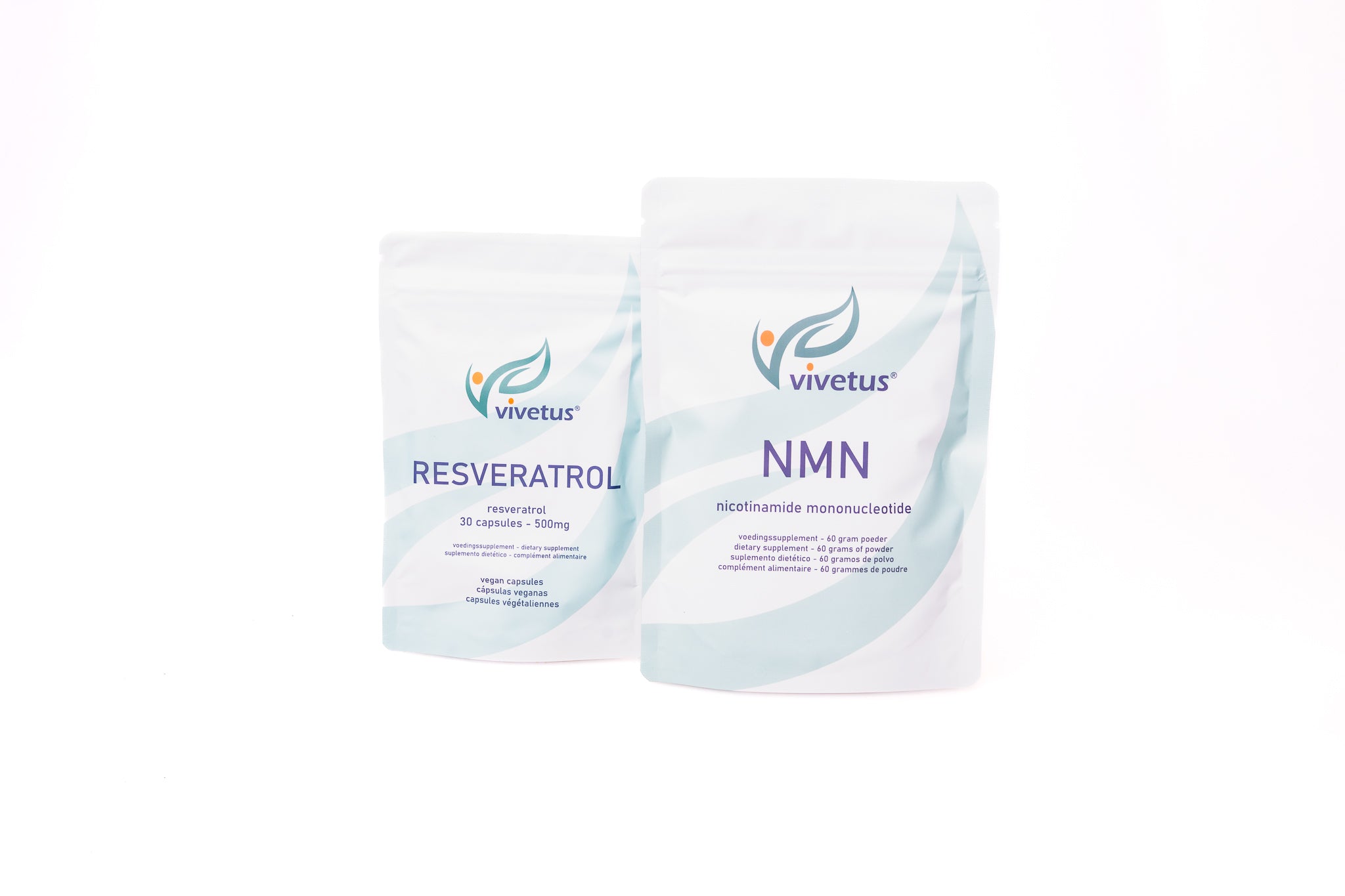
Behavioural steps and clinical treatment come first. Once those are in place, targeted supplementation can support the biological processes that sleep is meant to protect: cellular repair, metabolic regulation, and the NAD+ pathways that decline with age.

Vivetus offers a range of vegan, purity-tested supplements formulated with reference to the longevity science discussed throughout this article. Products including NMN, resveratrol, fisetin, and berberine address the cellular and metabolic pathways that healthy sleep is meant to sustain. All are third-party tested and available with international shipping, including across Central Europe, with subscription options for consistent long-term use.
If you are already sleeping well and want to support the biological processes that run during those hours, browse the Vivetus longevity supplement range and consider discussing options with your clinician. Free shipping applies on orders over €50.
Useful sources and further reading
The following peer-reviewed sources and reviews underpin the claims in this article. For personalised guidance, consult a clinician rather than relying on population-level data alone.
- Sleep Duration and All-Cause Mortality: A Systematic Review and Meta-Analysis of Prospective Studies (PMC) — pooled analysis of 27 cohort samples, nearly 1.4 million participants.
- Sleep duration and risk of all-cause mortality: meta-regression of 40 prospective cohort studies (PubMed) — non-linear dose-response analysis confirming the seven-hour nadir.
- Objectively regular sleep patterns and mortality: Multi-Ethnic Study of Atherosclerosis (PMC) — actigraphy-based cohort establishing regularity as an independent mortality predictor.
- Sleep and Human Aging (PMC review) — comprehensive review of age-related changes in sleep quantity, quality, and neural mechanisms.
For a broader overview of evidence-backed healthy ageing habits, including sleep, exercise, and nutrition strategies, the Vivetus resource library provides further reading.