
1 g/day Limit: Resveratrol Side Effects and Safety for the Netherlands
Resveratrol is generally well tolerated at common supplement doses, up to about 1 g per day, but it can cause dose-related gastrointestinal effects and carries meaningful drug interactions and contraindications. Trials up to around 1 g daily show good tolerance; higher doses can cause more stomach complaints. Anyone on prescription medicines, particularly blood thinners, should check with a clinician or pharmacist before combining resveratrol with existing treatment.
TL;DR:
- Resveratrol is generally safe up to about 1,000 mg daily, but higher doses above 2.5 grams can cause gastrointestinal issues and other mild side effects.
- Combining resveratrol with blood thinners or medications processed by CYP3A4 and CYP2D6 enzymes can increase bleeding risk and alter drug levels, requiring medical consultation.
- Formulations with co-formulants like piperine may enhance absorption, so total daily intake should be considered across all supplement sources.
- Long-term safety data remains limited, and use beyond a few months warrants caution, especially for those with liver conditions or on hormonal therapies.
- Certain groups, including pregnant women, individuals on anticoagulants, and those with estrogen-sensitive conditions, should avoid or seek guidance before using resveratrol.
Table of Contents
- Resveratrol bijwerkingen: which side effects are reported and at what dose
- Which drug and supplement interactions matter most?
- How much resveratrol is safe, and how does formulation change that?
- What does the clinical evidence actually establish?
- Who should be cautious or avoid resveratrol?
- Vivetus perspective on resveratrol safety and product quality
- Choosing a tested resveratrol product from Vivetus
- Sources
Resveratrol bijwerkingen: which side effects are reported and at what dose
Most people who take a standard resveratrol supplement notice nothing unusual at all. The side effects that do get reported cluster around the digestive system and tend to appear once the dose climbs well above typical supplement strength.
At doses up to around 1,000 mg per day, clinical evidence generally describes resveratrol as safe and well tolerated. A single-dose pharmacokinetic trial using 500 mg found no adverse reactions among the healthy volunteers studied, which matches what most people experience with a standard capsule.
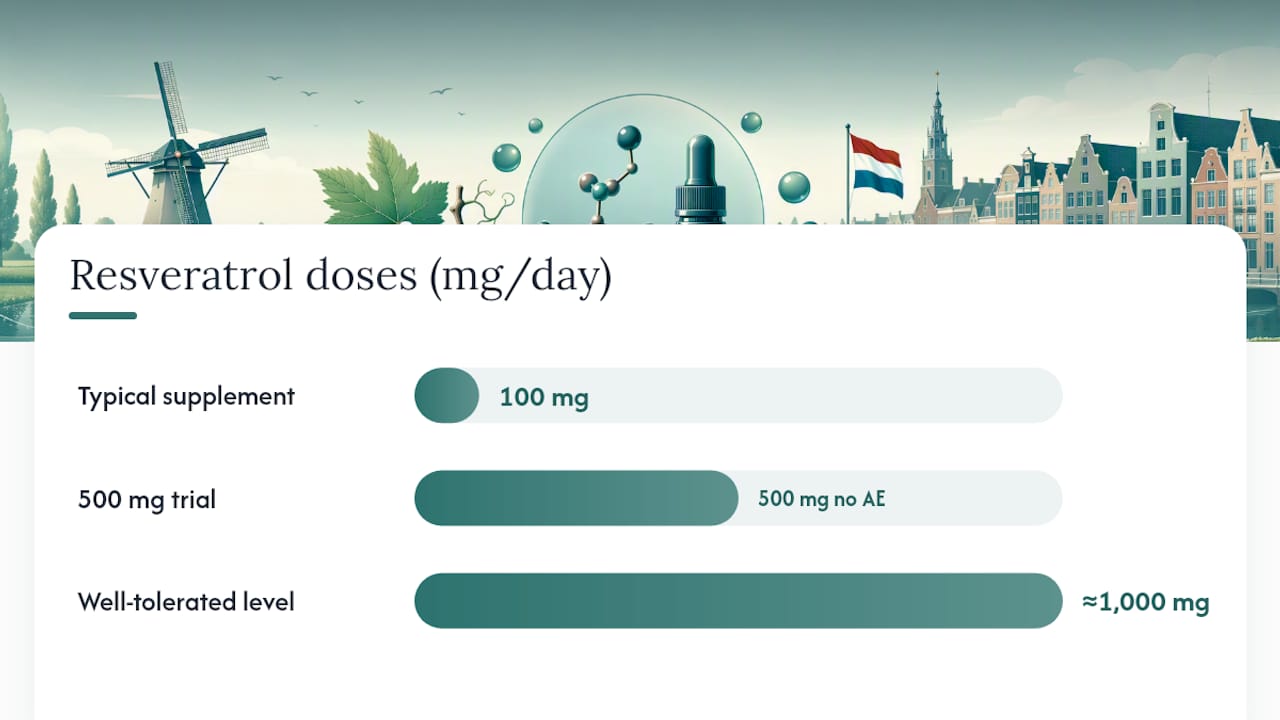
The picture changes at higher intakes. Gastrointestinal complaints become noticeably more common once doses reach 2.5 to 5 grams per day, a range far beyond what any standard supplement bottle recommends.
Reported side effects include:
- Gastrointestinal symptoms: nausea, bloating, mild diarrhoea, or stomach cramping, usually the first sign of overdoing it.
- Headache: occasional and typically mild, more often reported at higher doses.
- Dizziness: less common but noted in some trial participants at elevated intakes.
- Fatigue: sporadic reports, generally resolving once the dose is reduced.
Dose and tolerance: Well tolerated at ≤1 g/day in most trials. GI complaints rise sharply from 2.5–5 g/day, a dose range no standard consumer product reaches.
A small number of reports mention asymptomatic changes in liver enzymes, though reviews find no consistent pattern of liver injury tied to resveratrol use. Long-term safety data beyond a few months of continuous use remain thin, so treat any persistent digestive upset, unusual fatigue, or skin reaction as a signal to stop and speak with a clinician rather than push through it.
Which drug and supplement interactions matter most?
Resveratrol’s biggest safety concern isn’t the compound itself. It’s what happens when it meets other things you’re already taking.
Resveratrol inhibits platelet aggregation, which means it can raise bleeding risk when combined with anticoagulants or antiplatelet drugs such as warfarin, aspirin, or clopidogrel. Clinicians commonly advise stopping resveratrol roughly two weeks before elective surgery to let normal clotting function return.
Beyond bleeding risk, resveratrol modulates several enzymes and transport proteins that determine how quickly your body clears medicines. It can inhibit CYP3A4, CYP2D6, and P-glycoprotein transporters, which handle a large share of prescription drugs. That inhibition can raise blood levels of medicines metabolised through those same pathways, from certain statins to some antidepressants.
Watch for these interaction categories:
- Anticoagulants/antiplatelets: increased bleeding risk; stop before surgery.
- CYP3A4/CYP2D6 substrates: altered drug levels, from statins to certain psychiatric medications.
- Hormonal therapies: resveratrol has oestrogenic activity in some studies, relevant for anyone on hormone treatment or with an oestrogen-sensitive condition.
- Other supplements: quercetin, pterostilbene, and NAD+ precursors can shift resveratrol’s own bioavailability and, by extension, its interaction profile.
Pro Tip: Bring your full supplement stack to medication reviews, not just prescription drugs. Combining resveratrol with quercetin, for instance, can meaningfully increase absorption, which changes the interaction risk without changing the label dose.
How much resveratrol is safe, and how does formulation change that?
Clinical trials have used doses spanning tens of milligrams up to about 1 g per day, with tolerance generally steady across the range. For everyday self-care, a conservative upper intake near 1 g daily provides a buffer below where gastrointestinal complaints begin to appear.
Adverse-event signals become more consistent at 2.5 g per day and above, a threshold worth remembering if you ever see a product marketed at “high-dose” strength.
Formulation matters more than most labels let on:
- Trans-resveratrol is the biologically active form most trials use; check the label specifies this rather than a vague “resveratrol extract.”
- Co-formulants such as piperine or phospholipid complexes can raise absorption, meaning a lower labelled dose may behave like a higher one in the body.
- Cumulative dosing is easy to miss when using more than one supplement containing resveratrol, such as a standalone capsule alongside a longevity blend. Add up total daily intake across every product before assuming you’re within a safe range.
What does the clinical evidence actually establish?
The clinical picture on resveratrol safety is more reassuring than firm. Nearly 200 studies have examined resveratrol across different health indications, and safety up to 1 g per day appears consistently, yet no single dosing regimen has become the accepted clinical standard.
A systematic review covering the human trial evidence reached a similar conclusion: resveratrol is generally well tolerated at that threshold, but the authors called for larger, longer trials before it can be recommended for routine clinical use. Most existing studies run for weeks or months, not years, and much of the mechanistic promise around resveratrol comes from animal or cell-based research that doesn’t always translate cleanly to human dosing, given how variable absorption is from person to person.
Resveratrol’s safety data are consistent but shallow: dozens of short trials point the same direction, yet none run long enough to rule out effects that might only appear after years of daily use.
The practical takeaway sits in the middle ground: short-term use at moderate doses looks safe based on what’s been studied, but nobody can yet say the same about years of high-dose use with confidence.
Who should be cautious or avoid resveratrol?
Certain groups face higher risk and should get medical guidance before starting resveratrol rather than after.
- Pregnant or breastfeeding people should avoid resveratrol, since safety data for this group simply doesn’t exist in any meaningful way.
- Anyone on anticoagulants or antiplatelet medication needs clinician input given the bleeding-risk interaction described above.
- People with oestrogen-sensitive conditions, including certain breast cancers, should seek specialist advice given resveratrol’s oestrogenic activity in some studies.
- Those with hepatitis B or C warrant extra caution given the isolated liver enzyme signals noted in supplement databases.
- Anyone facing elective surgery should stop resveratrol roughly two weeks beforehand and resume only once cleared.
Pro Tip: Before any appointment, write down every supplement and dose you’re taking, plus your reason for taking it. A two-minute list often reveals interactions a rushed verbal summary would miss.
Vivetus perspective on resveratrol safety and product quality
Resveratrol’s safety record is solid within familiar limits, not limitless. What’s missing from most consumer guidance isn’t the dose ceiling, it’s the habit of treating supplements as a stack rather than single products. Two “safe” ingredients taken together can behave differently than either does alone, and that’s where most avoidable problems start.
Vivetus tests every batch for purity and builds bundles around doses that sit inside the ranges this evidence actually supports, rather than chasing the highest number on a label. That’s a deliberately conservative stance, and it won’t replace a conversation with your GP or pharmacist about your own medication list. Read more from Jord, Vivetus’s author.
— Jord
Choosing a tested resveratrol product from Vivetus
Vivetus takes a straightforward approach: dose within the ranges the evidence actually supports, tested for purity, without inflated claims.
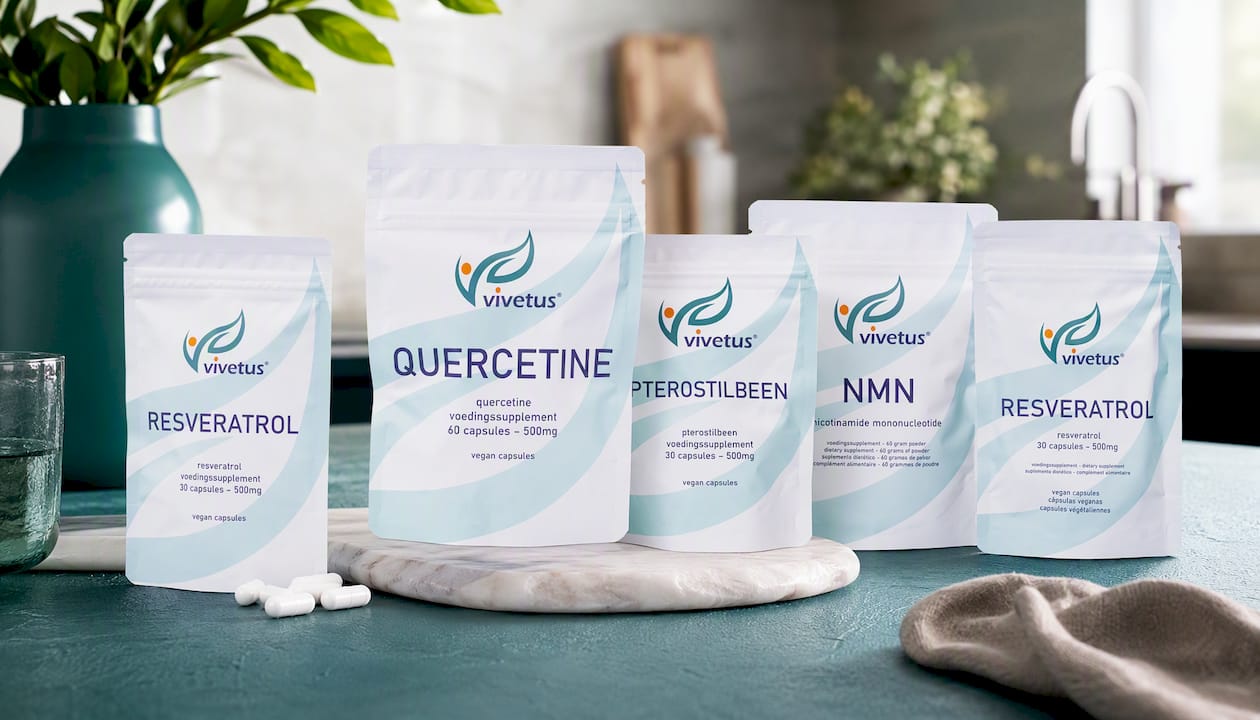
The Vivetus® Resveratrol capsules deliver 500 mg of trans-resveratrol per serving, in the middle of the range trials have found well tolerated, and suit anyone wanting a standard, transparently dosed product rather than guesswork. For readers building a broader routine, the 🛡 Cell Protection bundle pairs resveratrol with complementary antioxidants, while the 🔬 Longevity Core bundle combines it with other longevity-focused ingredients like NAD+ precursors for a fuller stack. Whichever option fits your routine, check your current medications against the interaction notes above first, and take that list to a pharmacist or GP if you’re on anticoagulants or hormonal therapy. Start by browsing the resveratrol dosage guide to match a product to your own routine.
This article is general information, not a substitute for advice from a qualified doctor. Consult a qualified healthcare professional about your own circumstances before acting on anything here.
Sources
- Drugs
- Bioavailability and safety study of resveratrol 500 mg — PMC
- Resveratrol — Memorial Sloan Kettering Cancer Center (MSKCC)