
Quercetin benefits: what the evidence actually shows
Quercetin, the flavonol found in onions, apples, and tea, has some of the most plausible human evidence among dietary polyphenols for cardiovascular support, allergy modulation, and exercise-related oxidative stress. The clinical picture is mixed, though: several effects remain primarily preclinical, and formulation matters enormously. Plain quercetin has low oral bioavailability, so phytosome or lecithin-complexed forms are preferred to improve absorption when aiming for therapeutic plasma levels. One critical safety note before anything else: quercetin inhibits CYP3A4, CYP1A2, and CYP2C9 enzymes and P-glycoprotein, which means it can raise blood levels of several prescription medicines. Anyone on anticoagulants or multiple CYP-metabolised drugs should consult a clinician before starting.
Effects with the strongest human evidence:
- Blood pressure reduction in small trials at 500–1,000 mg/day
- Reduced hospitalisation and oxygen need in a phytosome-quercetin RCT in COVID-19 outpatients
- Modulation of oxidative DNA damage markers after exercise stress
Effects that are mainly preclinical (animal or cell studies):
- Neuroprotection and direct anti-ageing effects via sirtuin pathways
- Anti-tumour activity
- Metabolic and insulin-sensitising effects
Key takeaways
Quercetin’s most credible human benefits centre on cardiovascular markers and oxidative stress modulation, and formulation quality is the single factor that most determines whether supplementation produces any measurable effect.
| Point | Details |
|---|---|
| Best-supported human benefits | Blood pressure reduction and immune/viral support have the most human trial data, at 500–1,000 mg/day. |
| Formulation is decisive | Phytosome quercetin can achieve up to ~20× greater absorption than plain powder, making product choice critical. |
| Drug interactions require attention | CYP3A4, CYP1A2, CYP2C9, and P-gp inhibition can raise levels of multiple prescription medicines, including warfarin. |
| Safety profile | Short-term use at trial doses is generally well tolerated; long-term high-dose safety data remain limited. |
| Vivetus quercetin | A 500 mg, lab-tested, vegan capsule option with transparent batch testing and subscription availability. |
Table of Contents
- What is quercetin and how does it work in the body?
- Where does quercetin come from, and do you need a supplement?
- What health benefits does quercetin offer?
- What do human trials and reviews actually show?
- Dosing, timing, and why formulation changes outcomes
- Side effects, safety, and drug interactions
- When should you consult a clinician before taking quercetin?
- How to assess quercetin product quality
- Why quercetin matters for healthy ageing
- Vivetus quercetin: lab-tested and ready to order
- Sources
What is quercetin and how does it work in the body?
Quercetin is a flavonol, a subclass of flavonoids within the broader polyphenol family. It is one of the most abundant dietary polyphenols in the human diet and is found primarily in the outer layers of plants: skins, leaves, and peels. The name “quercetin” comes from Quercus, the oak genus, reflecting its early isolation from plant bark.
Antioxidant and anti-inflammatory mechanisms
Quercetin neutralises free radicals directly and activates the Nrf2 pathway, a master regulator of the body’s own antioxidant enzyme production. It also suppresses NF-κB, a central driver of inflammatory signalling, which is why it appears in research on conditions from allergic rhinitis to metabolic syndrome. Reviews confirm that quercetin exerts antioxidant, anti-inflammatory, and neuroprotective effects via SIRT1 and related signalling pathways, though most mechanistic depth comes from preclinical studies.
Immunomodulatory effects and metal chelation
Quercetin also modulates mast cell degranulation, which is the process behind histamine release in allergic reactions, and chelates metal ions such as iron and copper. Metal chelation reduces the formation of reactive oxygen species through Fenton-type reactions. These mechanisms are well characterised in vitro; their translation to clinically meaningful human outcomes depends heavily on how much quercetin actually reaches systemic circulation.
Oral bioavailability of plain quercetin is low, typically estimated in the range of 1–17% depending on the food matrix or formulation. This is not a minor technical detail: it is the central reason why supplement formulation determines whether you see any effect at all.
Where does quercetin come from, and do you need a supplement?
Food sources and typical amounts
Quercetin is concentrated in the outer layers of plants. The richest common sources are:
- Red and yellow onions (particularly the outer rings and skin)
- Apples (predominantly in the peel)
- Capers (among the highest concentrations of any food)
- Kale and other dark leafy greens
- Black and green tea
- Blueberries, cranberries, and elderberries
- Red grapes and red wine
Approximate quercetin content varies considerably by variety, growing conditions, and preparation method. Cooking and peeling reduce content significantly.
Values are approximate and vary by cultivar and preparation.
When does a supplement become necessary?
A typical Western diet provides roughly 10–100 mg of quercetin per day. Trial doses that produced measurable effects on blood pressure or inflammatory markers generally ran at 500–1,000 mg/day, well above what food alone delivers. Dutch clinical-nutrition guidance confirms that significant biological effects are usually seen at doses substantially above typical dietary intake.
Pro Tip: Eat apples and onions with their skins on wherever possible. The quercetin content in an apple peel can be several times higher than in the flesh alone, so peeling removes most of the benefit.
If your goal is general dietary support, food sources are a reasonable starting point. If you are targeting a specific health outcome studied in trials, supplementation with a bioavailable formulation is the practical route.
What health benefits does quercetin offer?
Cardiovascular health
Quercetin inhibits LDL oxidation and modulates endothelial nitric oxide production, both relevant to arterial health. Observational data link higher intake of quercetin-rich foods with lower cardiovascular mortality in some cohorts, though such studies cannot establish causation and are subject to confounding by overall diet quality. Small controlled trials suggest blood pressure reductions at 500–1,000 mg/day. The cardiovascular signal is plausible but not yet confirmed by large, well-powered RCTs.
Allergy and respiratory support
Quercetin stabilises mast cells and reduces histamine release, which is the mechanism behind its use in allergy and hay fever contexts. Human trial data here are limited and mostly small-scale, but the mechanistic rationale is clear. Some practitioners use it as an adjunct to standard antihistamine approaches.
Immune and antiviral effects
The most notable human trial in this area used a phytosome quercetin formulation at 1,000 mg/day in 152 COVID-19 outpatients over 30 days. The randomised controlled trial reported fewer hospitalisations, reduced need for oxygen therapy, and fewer progressions to intensive care versus standard care alone. The authors attributed part of the effect to the phytosome form’s superior absorption. This is a single trial with a specific population and formulation; it does not generalise to all immune challenges.
Neuroprotection and ageing biology
Quercetin activates SIRT1 and SIRT6, two sirtuin proteins involved in DNA repair, cellular stress response, and metabolic regulation. A small human mechanistic trial found that short-term quercetin supplementation modulated SIRT6 and Nrf2 signalling and reduced exercise-induced oxidative DNA damage markers. These findings are preliminary and mechanistic; direct neuroprotective effects in humans have not been established in large trials.
Metabolic and skin effects
Cell and animal studies show quercetin can improve insulin sensitivity and reduce adipogenesis. Human metabolic data are sparse. For skin, topical and oral quercetin has been studied for UV protection and collagen support in small trials, but evidence remains early-stage.
What do human trials and reviews actually show?
The clinical evidence base for quercetin is growing but uneven. Here is a summary of the most relevant human findings:
- Blood pressure: Trials at 500–1,000 mg/day for 4–10 weeks report reductions in systolic and diastolic blood pressure in predominantly small studies. Heterogeneity in formulation, dose, and population limits firm conclusions.
- COVID-19 outpatient outcomes: The 30-day phytosome-quercetin RCT (152 participants, 1,000 mg QP/day) showed clinically meaningful reductions in hospitalisation and disease progression versus standard care. Limitations include single-centre design and a specific patient population.
- Exercise-induced oxidative stress: A small controlled trial found quercetin modulated SIRT6/Nrf2 signalling and reduced oxidative DNA damage markers after exercise. Sample size was small and findings are mechanistic.
- Inflammatory markers: Several small trials report reductions in CRP and IL-6 at doses of 500 mg/day and above, but results are inconsistent across studies.
A recurring theme across reviews is that formulation, dose, and duration vary so widely between trials that pooling results is difficult. Studies using plain quercetin powder often show weaker or null effects compared with those using phytosome or other enhanced-absorption forms. This is not a trivial methodological point: it is the single biggest source of heterogeneity in the literature.
Dosing, timing, and why formulation changes outcomes
Common trial doses and durations
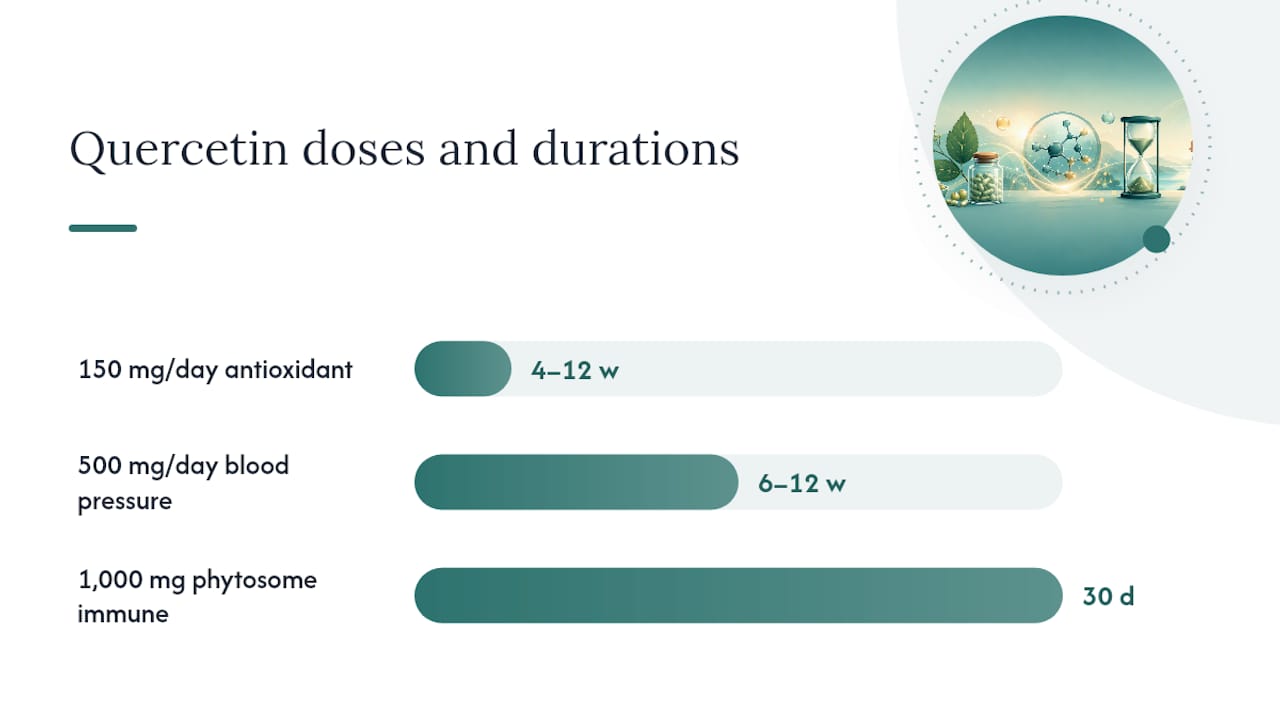
| Dose range | Typical duration | Outcomes targeted |
|---|---|---|
| 150 mg/day | 4–12 weeks | General antioxidant markers, tolerability |
| 500 mg/day | 6–12 weeks | Blood pressure, inflammatory markers |
| 1,000 mg/day (phytosome) | 30 days | Immune/viral outcomes, hospitalisation |
The bioavailability problem
Plain quercetin powder has low and variable oral absorption. Phytosome formulations, in which quercetin is complexed with phospholipids (typically sunflower lecithin), can increase plasma exposure by up to approximately 20-fold compared with unformulated quercetin. This means a lower nominal dose of a phytosome product can achieve plasma levels comparable to a much higher dose of plain powder. The practical implication: the dose on the label is only meaningful in the context of the formulation behind it.
Liposomal delivery and quercetin complexed with other absorption enhancers (such as vitamin C or bromelain) also show improved uptake in some studies, though phytosomes have the most clinical trial data behind them.
Practical checklist for dosing and timing
- Take quercetin supplements with a meal containing some fat to support absorption
- Pairing with vitamin C may support quercetin’s antioxidant activity in some protocols
- Standard trial durations run 4–12 weeks; long-term safety data beyond this window are limited
- Start at the lower end of the dose range if you are new to quercetin and have no clinician guidance
Side effects, safety, and drug interactions
Tolerability
Short-term human studies at 150–1,000 mg/day generally report good tolerability. Common mild effects noted in some participants include headache and gastrointestinal discomfort at higher doses. FDA GRAS records support a generally acceptable safety profile for quercetin at doses used in supplements. Evidence on very long-term safety at high doses remains limited.
Drug interactions: the most important safety consideration
Quercetin inhibits several cytochrome P450 enzymes and P-glycoprotein. This can raise plasma concentrations of medicines that rely on these pathways for metabolism or transport:
- CYP3A4 inhibition: affects statins, calcium channel blockers, some immunosuppressants, and many other drugs
- CYP1A2 inhibition: affects caffeine, theophylline, and certain antidepressants
- CYP2C9 inhibition: affects warfarin, some NSAIDs, and certain antidiabetic drugs
- P-glycoprotein inhibition: can increase absorption of drugs that are normally effluxed in the gut
The warfarin interaction is particularly relevant: quercetin can increase anticoagulant effect, raising bleeding risk. Anyone on warfarin or other anticoagulants should not start quercetin without INR monitoring and clinician oversight.
Contraindications and cautions
- Pregnancy and breastfeeding: insufficient human safety data; avoid supplemental doses unless directed by a clinician
- Liver disease: quercetin is metabolised hepatically; caution is warranted in significant liver impairment
- Iron deficiency: quercetin chelates iron; high supplemental doses may reduce iron absorption, relevant for those with low iron stores
- Pre-surgery: discontinue at least two weeks before planned surgery due to potential effects on platelet function and drug metabolism
For supplement safety guidance in the context of healthy ageing, reviewing your full supplement stack with a clinician is a sensible step before adding quercetin at therapeutic doses.
When should you consult a clinician before taking quercetin?
Professional review is advisable in the following situations:
- You take any anticoagulant (warfarin, apixaban, rivaroxaban, or similar)
- You take multiple prescription medicines metabolised by CYP3A4, CYP1A2, or CYP2C9
- You are pregnant, planning pregnancy, or breastfeeding
- You have a diagnosed liver condition
- You have iron-deficiency anaemia or are on iron supplementation
- You are scheduled for surgery within the next four weeks
- You are already taking a complex multi-supplement regimen
What to bring to the appointment: a full list of current prescription and over-the-counter medicines, your current supplement stack with doses and brands, the quercetin product you intend to use (including formulation type and dose per capsule), and your intended daily dose and duration.
Monitoring during supervised use: if your clinician approves quercetin alongside warfarin, INR should be checked more frequently in the first weeks. For other CYP-sensitive drugs, therapeutic drug monitoring may be appropriate depending on the medicine’s narrow or wide therapeutic index.
How to assess quercetin product quality
The gap between a well-formulated quercetin product and a poor one is large enough to determine whether you see any effect at all. These are the markers that matter:
- Standardised quercetin content: the label should state the exact amount of quercetin (not just the extract weight) per serving
- Formulation type: look for phytosome, lecithin complex, liposomal, or equivalent absorption-enhancement technology; plain quercetin powder at the same nominal dose will deliver far less to systemic circulation
- Certificate of Analysis (CoA): a batch-specific document confirming quercetin content, absence of heavy metals, and microbiological safety; reputable brands make this available on request or on their website
- Third-party testing: independent laboratory verification of purity and potency, separate from the manufacturer’s own quality control
- Excipients: avoid products with unnecessary fillers, artificial colours, or allergens if these are relevant to you
Pro Tip: When reading a CoA, check that the quercetin content figure matches the label claim within a reasonable tolerance (typically ±10%). A CoA that only lists the plant extract weight without specifying quercetin content is not sufficient verification.
Phytosome formulations have been shown in pharmacokinetic studies to increase plasma exposure by up to approximately 20-fold versus plain quercetin, meaning the formulation technology is not a marketing claim but a measurable pharmacokinetic difference. For readers comparing quercetin with resveratrol or other polyphenols in a longevity plan, the same bioavailability logic applies: the delivery system shapes the outcome.
Why quercetin matters for healthy ageing
The case for quercetin in a longevity-focused programme rests on its position at the intersection of several ageing-relevant pathways. It activates SIRT1 and SIRT6, two sirtuins that regulate DNA repair and cellular stress response. It suppresses NF-κB-driven chronic inflammation, the low-grade inflammatory state that underlies much of age-related tissue decline. It supports Nrf2, the pathway that governs the body’s own antioxidant defences, which weaken with age.
Most of this mechanistic evidence comes from preclinical work. The honest position is that quercetin is one of the more biologically plausible polyphenols for ageing-related support, not a proven anti-ageing therapy. What separates it from many other compounds in this space is that some human trial data, particularly on cardiovascular markers and oxidative stress, point in the same direction as the mechanistic work.
Quercetin fits most naturally into a broader programme that includes dietary polyphenol intake from whole foods, regular physical activity, and other evidence-backed supplements. It is not a standalone solution. For readers interested in how quercetin compares with other antioxidants for ageing, the evidence hierarchy across polyphenols follows a similar pattern: mechanism is strong, human trial data are promising but limited, and formulation quality determines whether any of it translates.
Vivetus quercetin: lab-tested and ready to order
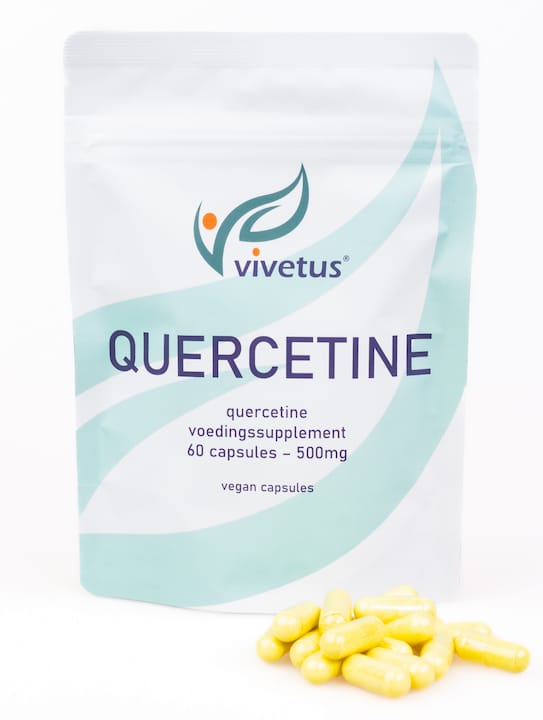
Vivetus offers a 500 mg quercetin supplement in a 60-capsule format, designed for adults who want a quality-controlled, vegan option without the uncertainty of unverified products. Each batch is tested for purity, and the product specification is transparent, so you can match the dose to the trial ranges discussed in this article.
Orders over €50 qualify for free shipping, and subscription purchase options are available for those who want to maintain a consistent supplementation schedule. If you are building a longevity-focused supplement plan and want a quercetin product where the label claims are backed by testing, the Vivetus quercetin page is the practical next step.
Sources
- Possible Therapeutic Effects of Adjuvant Quercetin
- Therapeutic application of quercetin in aging-related diseases: SIRT1 as a potential mechanism
- Quercetin - SOHF
- Quercetine | Stichting Orthokennis
- PMC article on dietary polyphenols and cardiovascular disease
- Quercetin activates the SIRT6-Nrf2 axis during oxidative stress, modulating ageing-associated markers | medRxiv
This article is general information, not a substitute for advice from a qualified doctor. Consult a qualified healthcare professional about your own circumstances before acting on anything here.