

How to boost immune health: your evidence-based guide
TL;DR:
- Supporting immune health requires consistent daily habits, including exercise, sleep, nutrition, and stress management. These routines strengthen immune response over time and reduce harmful inflammation caused by overactivation.
Immune health is defined by the consistency of your daily habits, not by any single supplement or superfood. The goal is to support your immune system steadily over time, not to artificially stimulate it. Fred Hutch researchers make this distinction clearly: an overactive immune system causes harmful inflammation, while a well-supported one responds proportionately to threats. The most effective strategies for how to boost immune health combine regular exercise, quality sleep, a fibre-rich diet, microbiome diversity, and targeted nutrients. This guide covers each pillar with evidence behind it.
What lifestyle habits are proven to support immune health?
Daily routines have a greater influence on immune function than genetics alone. Lifestyle changes significantly improve immune function beyond what your genes determine, which means the choices you make each day genuinely matter.
Exercise: the minimum effective dose
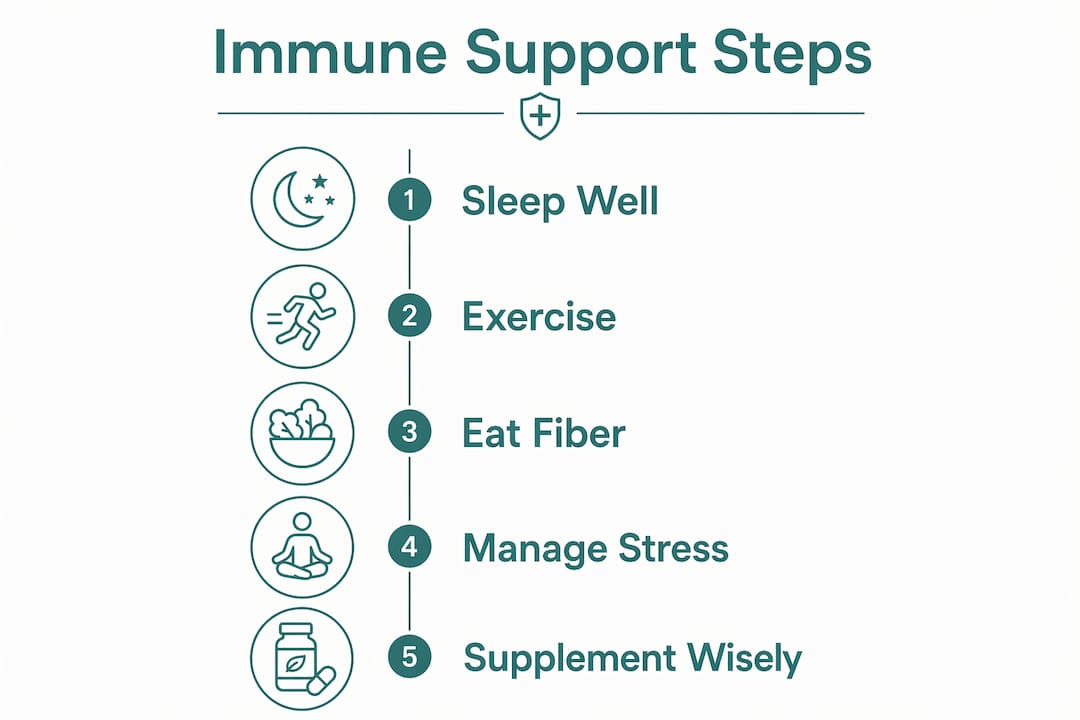
Adults need at least 150 minutes of moderate exercise or 75 minutes of vigorous exercise weekly to gain meaningful immune benefits. That translates to a brisk 30-minute walk five days a week. Moderate regular exercise increases circulating immune cells and raises antibody production. Both effects improve what immunologists call immune surveillance, the body’s ability to detect and respond to threats early.

Sleep: the immune system’s reset window
Seven to eight hours of sleep nightly revitalises immune cell function, with REM sleep being particularly important for immune memory. Cutting sleep short even by 90 minutes reduces the body’s ability to produce cytokines, the proteins that coordinate immune responses. Consistent sleep timing matters as much as duration. Going to bed and waking at the same time each day stabilises the circadian rhythm that governs immune cell activity.
Stress, tobacco, and alcohol
Cortisol, released during stress, suppresses immune function and disrupts both sleep and dietary habits. Chronic stress is therefore a compounding problem: it weakens immunity directly and undermines the other habits that support it. Tobacco damages the mucosal linings that act as the body’s first barrier against pathogens. Alcohol in excess impairs white blood cell production. Reducing all three removes significant drag on your immune system.
Pro Tip: If you can only change one habit this week, prioritise sleep. Sleep deprivation affects immune function faster and more measurably than most other lifestyle factors.
Key habits at a glance:
- Aim for 150 minutes of moderate activity weekly, spread across at least four days
- Keep a consistent sleep schedule, targeting 7–8 hours per night
- Practise stress reduction daily through walking, music, or mindfulness
- Avoid tobacco entirely and limit alcohol to occasional, moderate amounts
- Stay up to date with recommended vaccinations to prime immune memory
How does nutrition and the gut microbiome influence your immune system?
The gut microbiome is one of the most powerful modulators of immune response. Microbiome diversity through diet and environmental exposure shapes how effectively the immune system responds to infection. A less diverse microbiome means a less adaptable immune system.
Fibre: the foundation of microbiome health
Consuming at least 30 grams of fibre daily builds the microbial diversity that supports immune function and maintains gut lining integrity. That figure is higher than most people in the UK currently achieve. Practical sources include oats, lentils, chickpeas, broccoli, apples, and whole grain bread. Variety matters as much as quantity: different plant fibres feed different bacterial species, so eating a wide range of plants produces a richer microbiome.
Protein: the immune system’s building material
Protein is the primary building block for immune cells, antibodies, and the enzymes that drive immune reactions. During illness, the body prioritises protein for immune cell production, which can lead to muscle breakdown if dietary intake is insufficient. Adequate protein intake from eggs, fish, legumes, and dairy supports both immune function and recovery. This is especially relevant for older adults and caretakers managing the diets of people who are unwell.
Fermented foods and probiotics
Fermented foods such as natural yogurt, kimchi, kefir, and sauerkraut introduce beneficial bacteria directly into the gut. These bacteria compete with pathogens, produce short-chain fatty acids that feed gut cells, and signal immune cells in the gut lining. The effect is not dramatic or immediate, but consistent intake over weeks and months measurably shifts microbiome composition. Probiotic supplements can help, but whole fermented foods deliver a broader range of bacterial strains alongside other nutrients.
Foods that support immune strength
| Food group | Key nutrients | Immune benefit |
|---|---|---|
| Fruits and vegetables | Vitamin C, antioxidants, phytochemicals | Reduce oxidative stress on immune cells |
| Legumes and wholegrains | Fibre, B vitamins, zinc | Feed gut microbiome; support cell production |
| Oily fish and eggs | Vitamin D, protein, omega-3 | Regulate inflammation; build immune cells |
| Fermented foods | Probiotics, lactic acid | Increase microbiome diversity |
| Nuts and seeds | Zinc, selenium, vitamin E | Protect immune cells from damage |
A whole food, plant-rich diet delivers antioxidants and phytochemicals that reduce oxidative stress on immune cells. Supplements cannot replicate the full complexity of nutrients found in whole foods. The food-first approach remains the most reliable foundation for immune support.
What supplements and nutrients should be considered for immune support?
Supplements work best as a long-term, consistent addition to a good diet, not as a short-term fix when illness strikes. Taking supplements only when sick is ineffective. Steady nutrient availability through diet and supplementation is what the immune system actually requires.
Vitamins and minerals with genuine evidence
The nutrients with the strongest evidence for immune support are:
- Vitamin C: Supports the production and function of white blood cells. Found in citrus fruit, peppers, and kiwi. Supplementation is useful when dietary intake is low.
- Vitamin D: Deficiency directly weakens immune response. Blood tests are advised before supplementing, as excess vitamin D carries toxicity risks. In the UK, supplementation through autumn and winter is widely recommended due to limited sunlight.
- Zinc: Plays a key role in immune cell development and inflammatory signalling. Excess zinc intake inhibits absorption of other nutrients and can cause harm. Stay within recommended daily amounts.
- Protein: Not a micronutrient, but critical. Insufficient protein intake limits the body’s ability to produce immune cells, particularly during recovery from illness.
The risk of over-supplementing
Large short-term doses of supplements can inhibit nutrient absorption or cause toxicity, which is why a food-first approach is consistently recommended by nutrition researchers. More is not better with fat-soluble vitamins like D and A, which accumulate in body tissue. The goal is to fill genuine nutritional gaps, not to flood the system with high doses.
Pro Tip: Get a blood test before starting vitamin D supplementation. Deficiency is common in the UK, but the correct dose depends on your baseline level, not a general recommendation.
For a detailed breakdown of which supplements have genuine evidence behind them, Vivetus has published a thorough evidence-based supplement guide covering immune support specifically.
How can gardening and stress management further support immunity?
Some of the most effective immune support strategies are the least obvious. Two that consistently appear in current research are environmental microbe exposure and psychological stress management.
Gardening and soil microbes
Gardening exposes the skin to beneficial soil microbes that enhance gut microbial diversity and train immune defences through environmental contact. This explains why people raised in farm environments tend to show stronger immune resilience than those raised in highly sanitised settings. You do not need a farm. Regular contact with soil through gardening, even in a small garden or allotment, provides meaningful microbial exposure. The effect accumulates over time as the microbiome diversifies.
Stress management as immune medicine
Chronic stress is not just unpleasant. It is physiologically damaging to immune function through sustained cortisol elevation. Practical stress reduction strategies that have measurable effects include:
- Mindfulness meditation: Even 10 minutes daily lowers cortisol and reduces inflammatory markers over time.
- Walking in nature: Combines moderate physical activity with psychological restoration, addressing two immune pillars simultaneously.
- Music and creative activity: Shown to reduce cortisol and support mood regulation, which in turn protects immune function.
- Social connection: Isolation is associated with elevated cortisol and weakened immune responses. Maintaining regular contact with others supports resilience.
“The immune system does not operate in isolation from the mind. Psychological wellbeing and immune function are deeply connected, and stress management is one of the most underused tools in immune health.”
Healthy ageing habits, including staying socially active and mentally engaged, directly influence immune function over the long term. Vivetus covers this in detail in their lifestyle tips for healthy ageing guide, which addresses how daily choices compound over decades.
Key takeaways
Supporting your immune system consistently through diet, exercise, sleep, and stress management is more effective than any short-term supplement or quick fix.
| Point | Details |
|---|---|
| Support, do not boost | Artificially stimulating immunity risks harmful inflammation; steady support is the goal. |
| Fibre and microbiome | Eat at least 30 grams of fibre daily to build the gut diversity that drives immune response. |
| Sleep is non-negotiable | Seven to eight hours nightly, with consistent timing, restores immune cell function. |
| Supplement wisely | Test vitamin D levels before supplementing; avoid excess zinc and high-dose short-term regimens. |
| Stress management matters | Chronic cortisol elevation suppresses immunity; daily stress reduction is a clinical priority. |
The case for consistency over cleverness
The most common mistake I see is treating immune health as a problem to solve rather than a system to maintain. People reach for high-dose vitamin C at the first sign of a cold, skip sleep to exercise more, or take six supplements without ever eating a vegetable. None of that works. What does work is almost boring in its simplicity.
The research is clear on this. Steady habits, repeated daily, produce the microbiome diversity, the immune cell counts, and the hormonal balance that allow the immune system to do its job. There is no shortcut that replicates seven hours of sleep or a diet rich in 30 different plant foods each week.
Where I think supplementation genuinely helps is in filling gaps that diet alone cannot reliably close. Vitamin D in the UK is the obvious example. Most people are deficient through autumn and winter regardless of how well they eat, and a well-dosed supplement makes a real difference. But that is a targeted intervention based on a known deficiency, not a general wellness strategy.
The other thing worth saying: caretakers often neglect their own immune health while managing someone else’s. If you are caring for an older relative or a child with health needs, your own sleep, stress levels, and nutrition matter just as much. You cannot sustain good care from a depleted baseline.
Start with one habit. Fix your sleep schedule. Add a daily walk. Eat more plants. The immune system responds to consistency, not intensity.
— Jord
Vivetus and immune health: where to go next
Vivetus specialises in scientifically supported supplements designed for people who take their long-term health seriously.
The Vivetus range focuses on nutrients with genuine evidence behind them, including vitamin D, zinc, and protein-based formulations suited to healthy ageing. Every product is selected with the same food-first, supplement-to-fill-gaps philosophy outlined in this article. If you are ready to take a more structured approach to immune support, the Vivetus supplement range is a practical starting point. Products are available internationally, with free shipping on orders over €50.
FAQ
What does “supporting” the immune system actually mean?
Supporting the immune system means providing it with the consistent inputs it needs: adequate sleep, regular exercise, a nutrient-rich diet, and low chronic stress. It is distinct from artificially stimulating immune activity, which can cause harmful inflammation.
How much exercise do I need for immune benefits?
Adults need at least 150 minutes of moderate exercise or 75 minutes of vigorous exercise per week. Spreading this across four or more days produces better immune surveillance than a single long session.
Is vitamin D worth taking in the UK?
Vitamin D deficiency is common in the UK, particularly through autumn and winter, and deficiency weakens immune response. A blood test before supplementing is recommended to determine the correct dose and avoid toxicity.
Can I boost my immune system quickly when I feel a cold coming on?
Taking large supplement doses when illness starts is not effective. Immune function depends on steady nutrient availability built up over time, not sudden high-dose interventions.
Does gut health really affect immunity?
The gut microbiome is one of the most significant modulators of immune response. Eating at least 30 grams of fibre daily and including fermented foods like yogurt and kimchi builds the microbial diversity that supports immune function.